
How this comes up in practice
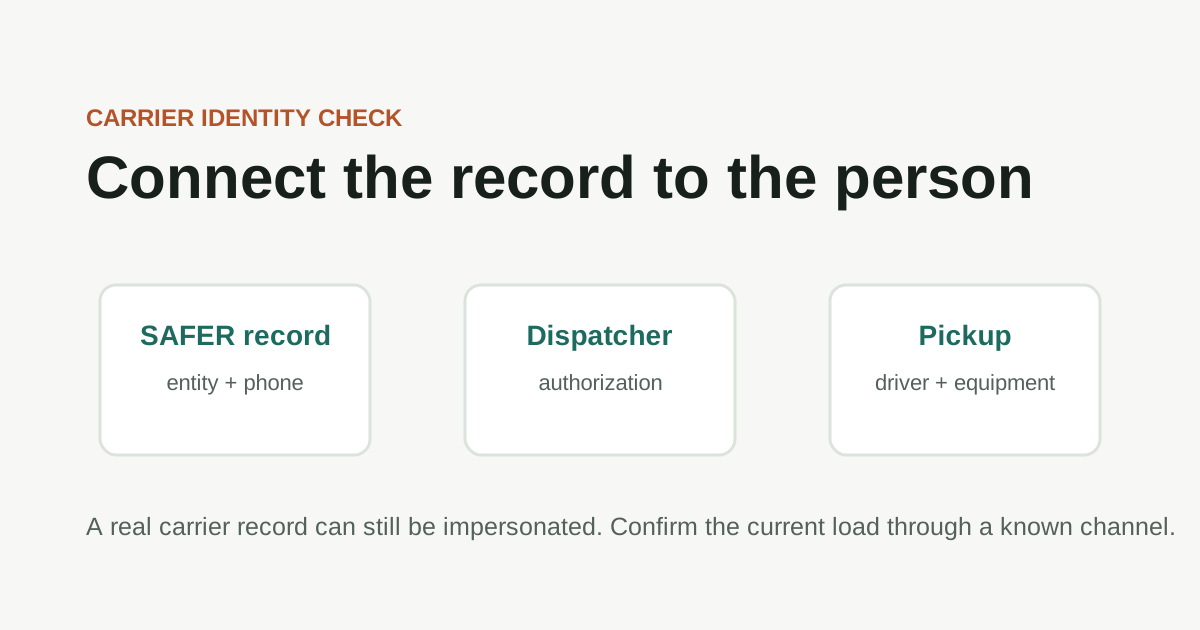
A fake broker typically presents with either no active FMCSA broker authority or uses a legitimate company's MC number to impersonate them. A fake carrier typically presents a real USDOT number belonging to a different entity, or combines genuine credentials with contact information that routes to a fraudulent operation. In both cases, the documents can look complete in isolation. What distinguishes each from a legitimate transaction is a comparison against a record that wasn't provided by the same party presenting the credentials: L&I for broker authority and financial responsibility, SAFER for carrier operating status and official contact. A call to the phone number in the official record — not the one in the current email thread or packet — is the check that closes the authentication gap for either scenario.
Key Takeaways
- Identify the party that first introduced the load or document.
- Write down each legal name, DBA, MC number, USDOT number, email domain, and phone number.
- Compare the transaction record against official FMCSA records and the documents exchanged.
- Pause when one party asks you to ignore a mismatch or move communication to a new channel.
Comparing broker impersonation signals with carrier impersonation signals
A fake broker either operates with no FMCSA broker authority, or uses a real company's MC number to impersonate them. A fake carrier may present a genuine USDOT number belonging to a different entity, operate under a recently created company name with documents that closely resemble an established carrier, or possess no authority combined with stolen paperwork. FMCSA's fraud and identity theft guidance explicitly identifies broker impersonation and unauthorized USDOT number use as two of the most documented freight fraud patterns, distinguishing them by which FMCSA system — L&I or SAFER — provides the primary verification check.
In both cases, the documents can look convincing in isolation. The check that matters is whether the person communicating can be confirmed through a contact path that wasn't first introduced in the same transaction — one that connects back to an independently verifiable company presence.
Comparing broker impersonation signals with carrier impersonation signals checklist
- Whether the MC or USDOT number belongs to the entity named in the rate confirmation
- Whether the company address and phone in FMCSA records match what was provided
- Whether a call to the official FMCSA-listed phone number confirms this load or load offer
- Whether broker financial responsibility records cover the same entity shown in the rate confirmation
- Whether the company has an established online presence that predates this transaction
What to save when impersonation signals appear on either side
For fake broker vs fake carrier, the useful record is usually the one that shows where misrepresented broker authority, carrier authority, and contact details first entered the file.
That record is stronger when it sits beside the dated lookup, the original message, and a note from the party connected to the transaction. It is weaker when it has been renamed, cropped, forwarded without headers, or separated from the transaction timeline.
What to save when impersonation signals appear on either side checklist
- Record the name, number, document field, contact path, or instruction tied to misrepresented broker authority, carrier authority, and contact details.
- Keep the original file or message before saving a marked-up copy.
- Add the source URL, access date, sender identity, and who confirmed or contradicted the detail.
What a matching MC or USDOT number doesn't establish about the sender
For basic fraud-pattern review, preserve the earliest version of each document before later corrections blur the timeline. In this guide, that starts with misrepresented broker authority, carrier authority, and contact details.
Keep the documents beside the message thread that introduced them, because the sequence often matters more than a single mismatch. Keep the question practical: what changed, who introduced it, and which dated record can be saved before anyone acts on it.
What a matching MC or USDOT number doesn't establish about the sender checklist
- First email or load board message
- Original and revised rate confirmations
- Carrier or broker packet as received
- Official lookup screenshots with dates
- Call notes showing who confirmed or denied the details
When the independent phone check is the only step that closes the loop
Ask questions that separate an operational mistake from an identity concern without accusing a party too early. In this guide, that starts with misrepresented broker authority, carrier authority, and contact details.
Good answers point to a record, a known contact, or a dated confirmation rather than a general assurance. Keep the question practical: what changed, who introduced it, and which dated record can be saved before anyone acts on it.
When the independent phone check is the only step that closes the loop checklist
- Who first introduced the load or document?
- Which legal entity is named in the official record?
- Which contact channel existed before this transaction?
- What changed between the first document and the current instruction?
Further context on impersonation comparison
Fraud basics are most useful when they slow down conclusions. A familiar brand, correct MC number, or polished packet can still be used by an unauthorized sender. In this guide, that starts with misrepresented broker authority, carrier authority, and contact details.
The safer habit is to write down the gap and the check it triggered, then decide whether the records resolved it. Keep the question practical: what changed, who introduced it, and which dated record can be saved before anyone acts on it.
Further context on impersonation comparison checklist
- Do not treat a warning sign as a finding.
- Do not assume the sender controls the company name they use.
- Do not rely on search snippets as official records.
- Do not skip preservation because the issue seems minor.
When to escalate the concern
Escalation begins when the file still has an identity gap after ordinary confirmation steps. In this guide, that starts with misrepresented broker authority, carrier authority, and contact details.
Move the issue to an internal lead, known company contact, insurer, law-enforcement contact, or official reporting channel based on what the records show. Keep the question practical: what changed, who introduced it, and which dated record can be saved before anyone acts on it.
When to escalate the concern checklist
- The known company contact denies the transaction.
- The same identifier appears with conflicting names or contacts.
- Pickup or payment is imminent and identity remains unresolved.
- The incident involves cyber-enabled access, theft, or identity misuse.
Source Notes
Source context for Fake Broker vs Fake Carrier
For fraud-basics topics, FMCSA fraud and identity theft guidance is the primary federal reference. FBI IC3 and FTC cover cyber-enabled and consumer fraud dimensions respectively. These sources establish what documentation matters, what official reporting channels exist, and how to describe patterns without overstating what records can prove. They do not certify any private party or determine fraud findings.
FAQ
Can a fake broker also operate as a fake carrier on the same load?
Yes. A fraudster can misrepresent both roles in a single transaction, particularly in a double-brokering scheme. Check official records for both the broker MC and the carrier USDOT independently.
If a USDOT number checks out in SAFER, does that confirm the carrier is legitimate?
It confirms a registered entity exists with that number. It doesn't confirm that the person presenting it is from that entity. A call to the SAFER-listed phone number — not a number provided by the presenting party — is the check that bridges the gap between a registered number and a confirmed authorized contact.
What should I compare first when either broker or carrier credentials look off?
Start with the MC or USDOT number in the official record — L&I for broker authority and financial responsibility, SAFER for carrier operating status and contact. A number that matches but a name, address, or phone that differs from what was presented is the most common indicator that the number is real but the sender is not.
Source References
- Broker and Carrier Fraud and Identity Theft Federal Motor Carrier Safety Administration. primary source. Last checked 2026-06-01. FMCSA guidance on broker and carrier fraud, unauthorized USDOT use, suspicious links, SAFER phone comparison, NCCDB, OIG, FTC, and IC3 reporting pointers.
- Licensing & Insurance Public Federal Motor Carrier Safety Administration. primary source. Last checked 2026-06-02. Official public portal for authority, insurance, and broker financial responsibility records.