
How this comes up in practice
A USDOT number that returns a clean SAFER record does not confirm that the person presenting it in a transaction has any connection to that company. The signals that suggest misuse tend to cluster: the equipment type doesn't match what SAFER shows for the carrier, the contact email uses a domain from a different state or company, and a call to the dispatcher number produces no one who can confirm the load or connect to the company's management. Each detail on its own warrants a follow-up question. When multiple details conflict with the SAFER record, holding the transaction for a SAFER-number callback — before sharing packet documents or releasing pickup details — is the appropriate step.
Key Takeaways
- SAFER screenshot
- L&I screenshot
- Carrier packet
- Emails
- Driver/equipment record
Where the USDOT verification starts
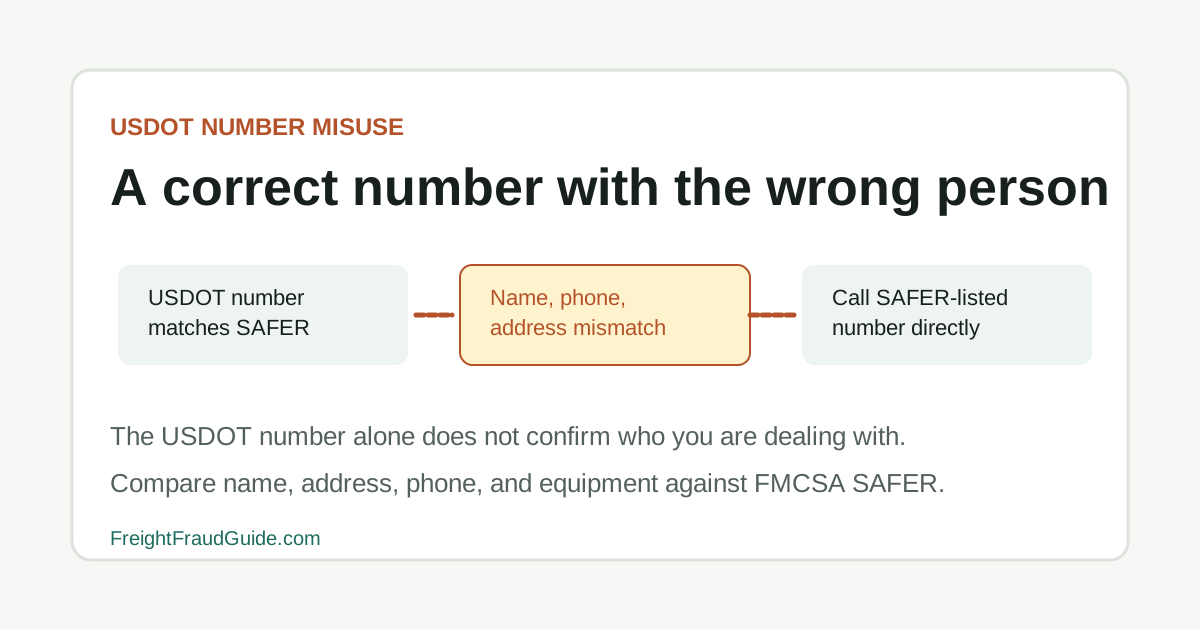
Compare the USDOT number to the carrier name, address, phone, cargo, equipment, and contact in the transaction.
Misuse often appears as a correct number paired with the wrong person, domain, or packet.
Where the USDOT verification starts checklist
- Check SAFER.
- Check L&I if applicable.
- Call back through a known company contact.
Records to pull alongside the USDOT check
For this workflow, build the file around safer screenshot and l&i screenshot. Keep the first version separate from later corrections so the sequence remains clear.
Records to pull alongside the USDOT check checklist
- SAFER screenshot
- L&I screenshot
- Carrier packet
- Emails
- Driver/equipment record
USDOT record signals worth investigating
Treat "USDOT number tied to another carrier" as a reason to slow the transaction and document a call-back. It is not, by itself, a public accusation or final finding.
USDOT record signals worth investigating checklist
- USDOT number tied to another carrier
- Address or phone mismatch
- Different equipment type
- Unconfirmed dispatcher
- Carrier denies load
Questions the USDOT check should answer
Start with the question "Who provided the USDOT number?" and tie the answer to a record, known contact, or dated instruction.
Questions the USDOT check should answer checklist
- Who provided the USDOT number?
- Does the carrier recognize the contact?
- Which record changed and when?
- Should the affected company file an official complaint?
What a USDOT number match doesn't confirm
The main trap here is assuming too much from an incomplete file. In particular: Do not assume the named carrier is the wrongdoer.
What a USDOT number match doesn't confirm checklist
- Do not assume the named carrier is the wrongdoer.
- Do not assume a current USDOT record validates the sender.
- Do not rely on a marketplace profile alone.
Official sources for USDOT verification
Use FMCSA fraud guidance as a comparison point and save the lookup date. Official status can change, and legitimate company records can be impersonated.
Official sources for USDOT verification checklist
- FMCSA fraud guidance
- SAFER
- L&I
- NCCDB if reporting is appropriate
When a USDOT concern requires escalation
Escalate when the file reaches a concrete unresolved point, such as: The legitimate carrier denies the transaction. Preserve the evidence and move the question to the right internal, insurance, legal, law-enforcement, or official reporting channel.
When a USDOT concern requires escalation checklist
- The legitimate carrier denies the transaction.
- Pickup or delivery already occurred.
- Multiple loads appear tied to the same misuse pattern.
Source Notes
USDOT number misuse is an authorization issue
FMCSA identifies unauthorized USDOT use as a fraud and identity theft concern. The transaction review should focus on mismatches and known contacts.
FAQ
Can a USDOT number be valid and still be used fraudulently?
Yes. The number belongs to the registered entity, but the communicating party may have no relationship to that entity. Confirming authorization means reaching the actual company management through an independent channel, not just matching the number.
Can a USDOT number appear active in SAFER even if the carrier is no longer operating?
Yes. SAFER data has update lag on some fields, and a company that has ceased operations may still show an active record if the system hasn't been updated. A SAFER-listed phone number that doesn't connect to a working company office is itself a verification signal — document the attempt and outcome.
If the USDOT number checks out but the email domain doesn't match, what's the priority step?
Call the phone number from the SAFER record for that USDOT number. Ask whoever answers to confirm whether they have a load posted for the specific lane and rate confirmation in question. A match confirms authorization; a disconnect between the SAFER contact and the transaction confirms the concern.
Source References
- Broker and Carrier Fraud and Identity Theft Federal Motor Carrier Safety Administration. primary source. Last checked 2026-06-01. FMCSA guidance on broker and carrier fraud, unauthorized USDOT use, suspicious links, SAFER phone comparison, NCCDB, OIG, FTC, and IC3 reporting pointers.
- SAFER Company Snapshot Federal Motor Carrier Safety Administration. primary source. Last checked 2026-06-03. Official Company Snapshot lookup. Treat as a current record check, not a guarantee of transaction authority.
- Licensing & Insurance Public Federal Motor Carrier Safety Administration. primary source. Last checked 2026-06-02. Official public portal for authority, insurance, and broker financial responsibility records.
- Fraud Alerts Federal Motor Carrier Safety Administration. primary source. Last checked 2026-06-04. FMCSA alert page for phishing attempts, spoofed portals, fake notices, SAFER impersonation, and registration-related scams.