Broker Verification · medium risk workflow · 4 min
Broker Authority Status Explained
A reference guide covering active, inactive, pending, revoked, or changed broker authority records and what to document when it occurs.
Reviewed June 2026 · K. Harmon, FreightFraudGuide.com
Reviewed in June 2026 for source support, document-preservation steps, and internal link context.
How this comes up in practice
Authority status can change between loads from the same broker without any notification to carriers. An operation that skips the L&I check on repeat loads because the relationship feels established may not discover a lapsed authority until a payment dispute prompts a records review. Running the check close to booking — not only when first setting up a broker relationship — catches a status change before the load is accepted. A status that was active on the previous load may not be active on this one. The check itself takes a few minutes; reconstructing the documentation trail after a dispute takes considerably longer.
Why authority status is a per-load check, not a one-time setup
Broker authority can be revoked, suspended, or lapsed without notice to carriers and shippers who previously booked loads with that entity. There's no automatic notification system that alerts business partners when a broker's status changes — the official record in L&I reflects the current status, but only if someone checks. For adjacent verification steps, compare this with Broker MC Number Lookup Checklist, Broker Bond / BMC-84 / BMC-85 Explained, and FMCSA Registration Guide.
This is why authority verification belongs at or near the time of booking, not only when establishing a new broker relationship. A status that was active on the previous load may not be active today. Companies change ownership, lose bonding coverage, and face regulatory action between transactions — none of which surfaces in the documents they continue to circulate.
The distinction between pending, active, and inactive authority is also worth understanding specifically. Pending means the registration is submitted but authority hasn't been granted. A pending entity doesn't yet have the authority they're claiming. Each status has implications for whether the entity is currently authorized to operate as a broker — not just whether the account exists in FMCSA's system.
Key Takeaways
Authority lookup screenshot
Rate confirmation
Broker agreement
Email thread
Call-back notes
What to check in the authority record
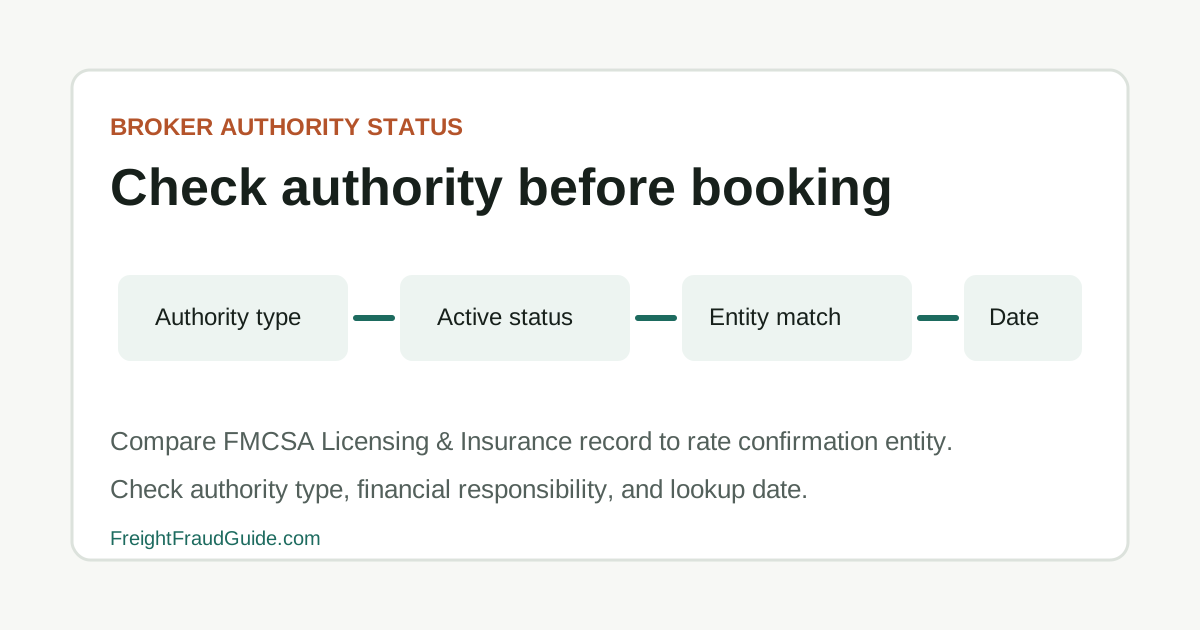
Check the broker authority status in the official record before relying on the broker name in a document.
Status language should be read together with financial responsibility and contact verification.
What to check in the authority record checklist
Record the lookup date.
Compare authority type to the role in the transaction.
Confirm any status concern through an official source.
Documents to save from the authority check
For this workflow, build the file around authority lookup screenshot and rate confirmation. Keep the first version separate from later corrections so the sequence remains clear.
Documents to save from the authority check checklist
Authority lookup screenshot
Rate confirmation
Broker agreement
Email thread
Call-back notes
Authority record signals worth investigating
Treat "Authority not active for the role presented" as a reason to slow the transaction and document a call-back. It is not, by itself, a public accusation or final finding.
Authority record signals worth investigating checklist
Authority not active for the role presented
Recent status change without explanation
Different entity appears in payment terms
Sender avoids authority questions
Questions authority status should answer
Start with the question "What authority does this party claim?" and tie the answer to a record, known contact, or dated instruction.
Questions authority status should answer checklist
What authority does this party claim?
Is the same entity shown on the rate confirmation?
Who can confirm the current status?
Has the broker name or DBA changed?
What authority status doesn't confirm
The main trap here is assuming too much from an incomplete file. In particular: Do not assume pending or inactive status is acceptable.
What authority status doesn't confirm checklist
Do not assume pending or inactive status is acceptable.
Do not assume a document issued yesterday reflects today's authority.
Do not assume the carrier should resolve a broker authority question alone.
Where to find current broker authority
Use FMCSA L&I as a comparison point and save the lookup date. Official status can change, and legitimate company records can be impersonated.
Where to find current broker authority checklist
FMCSA L&I
FMCSA broker registration page
FMCSA registration alerts for current process changes
When an authority concern requires escalation
Escalate when the file reaches a concrete unresolved point, such as: Authority is absent or inconsistent. Preserve the evidence and move the question to the right internal, insurance, legal, law-enforcement, or official reporting channel.
When an authority concern requires escalation checklist
Authority is absent or inconsistent.
Financial responsibility is missing or unclear.
The load is urgent and records cannot be reconciled.
Source Notes
Authority status can change
Broker authority should be checked close to booking and compared with the actual party tendering freight.
FAQ
How often should I recheck a broker's authority status?
Check the status close to booking, not just when you first set up the relationship. Authority can change between loads, and a status check from a prior load does not cover the current one.
What's the difference between pending and active broker authority?
Pending means the application is submitted but authority hasn't been granted. A pending status means the party doesn't yet have the authority they're claiming. Only an active status — for the entity and role shown on the transaction — satisfies the authority requirement for a brokered freight arrangement.
Does checking broker authority also confirm their financial responsibility?
No — they're separate records in L&I. A broker can have active authority while a financial responsibility filing (BMC-84 bond or BMC-85 trust) is missing, lapsed, or held under a different entity name. Both should be verified before booking, not just the authority status.
Source References
Licensing & Insurance PublicFederal Motor Carrier Safety Administration. primary source. Last checked 2026-06-02.Official public portal for authority, insurance, and broker financial responsibility records.
FMCSA RegistrationFederal Motor Carrier Safety Administration. primary source. Last checked 2026-06-04.FMCSA registration landing page. Use only as a current official entry point because registration modernization details can change.
Broker RegistrationFederal Motor Carrier Safety Administration. primary source. Last checked 2026-06-02.Official FMCSA broker registration page covering broker authority and financial responsibility filing requirements.
Registration AlertsFederal Motor Carrier Safety Administration. primary source. Last checked 2026-06-04.FMCSA registration alert hub for identity verification, Motus, electronic payments, and registration changes. Check the official page for current status.