
How this comes up in practice
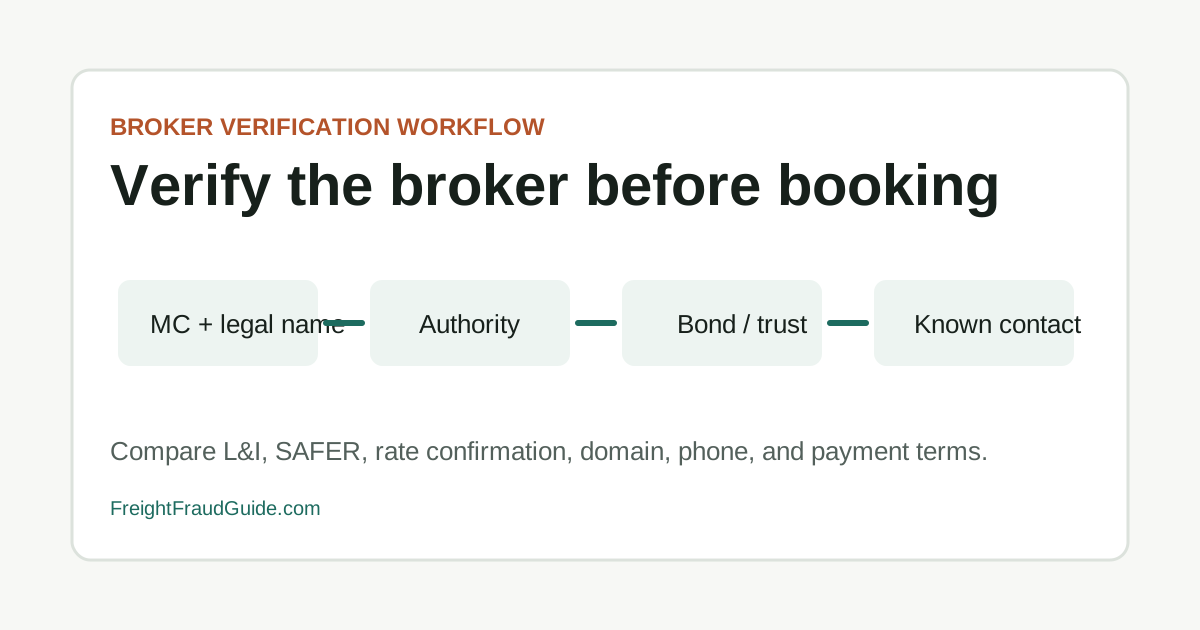
A carrier accepts a load through a rate confirmation that lists a real, active broker MC number. The load moves, delivers, and is invoiced. Two weeks later, when payment is overdue, the carrier searches the MC number in L&I and finds it belongs to a company that is unaware of the load. The email address on the rate confirmation, on close inspection, used a domain registered two weeks before the booking. The carrier moved a legitimate load in good faith; the actual broker never tendered it. Both accounts are correct. What the situation created was a carrier who needs to establish the chain of events for any claim they file — and who needs to separate the broker-side documentation from the delivery documentation in order to use either. Organizing records that show who introduced the load, through what channel, and using which credentials is the work that makes the file usable for claims, reporting, or legal review, regardless of whether the fraud was primarily broker-side, carrier-side, or both.
Why the fraud type determines what you document first
Broker fraud and carrier fraud produce different documentation priorities because they implicate different records. When the concern is broker-side — someone tendering loads without valid authority or impersonating an established broker — the records that matter are broker authority status in L&I, the domain and contact path that introduced the load, and any changes to payment instructions. When the concern is carrier-side — someone presenting a carrier's credentials without authorization — the records that matter are the SAFER contact for that carrier, the packet documents and how they arrived, and whether carrier management can confirm the dispatcher and the load. For adjacent verification steps, compare this with Fake Broker vs Fake Carrier, How to Verify a Freight Broker, and How to Verify a Motor Carrier.
The two can overlap in the same transaction. A fictitious pickup frequently involves someone who impersonated a broker to get the load tendered, then impersonated a carrier to arrange pickup. In that case, the documentation task covers both sides: the broker identity evidence and the carrier authorization evidence are each needed for reporting and for any claims process that follows.
The guide covers both patterns because the comparison is operational. Freight fraud reporting channels differ by the type of conduct involved — NCCDB handles FMCSA-jurisdictional matters, IC3 handles cyber-enabled elements. Organizing the records with the fraud type in mind, rather than treating all suspected fraud the same way, puts the file in the right shape for whichever channels apply.
Key Takeaways
- Identify the party that first introduced the load or document.
- Write down each legal name, DBA, MC number, USDOT number, email domain, and phone number.
- Compare the transaction record against official FMCSA records and the documents exchanged.
- Pause when one party asks you to ignore a mismatch or move communication to a new channel.
Distinguishing broker misrepresentation from carrier misrepresentation
Broker fraud and carrier fraud often look similar in the moment — someone is misrepresenting who they are and what they can do. The distinction matters for documentation and reporting because the relevant records, authority types, and complaint channels differ by role. FMCSA's fraud and identity theft guidance addresses both categories separately, and NCCDB complaint eligibility depends on whether the incident involves broker conduct, carrier conduct, or both.
Broker fraud typically involves someone tendering loads without valid broker authority or misrepresenting payment terms, company identity, or affiliation. Carrier fraud typically involves someone using a carrier's name, USDOT number, or packet documents without that carrier's authorization, or picking up freight under false pretenses. Both can happen in the same transaction, involving a fraudster who impersonates both roles in sequence.
Distinguishing broker misrepresentation from carrier misrepresentation checklist
- Which party introduced themselves first and with what specific credentials
- Whether broker authority and financial responsibility records in L&I match the communication
- Whether carrier authority and insurance in SAFER and L&I match the contact
- Who initiated any payment instruction or routing change, and when
- Which specific official record shows the mismatch
What to preserve when the type of misrepresentation is unclear
For broker fraud vs carrier fraud, the useful record is usually the one that shows where the differences between broker impersonation, carrier impersonation, and disputed performance first entered the file.
That record is stronger when it sits beside the dated lookup, the original message, and a note from the party connected to the transaction. It is weaker when it has been renamed, cropped, forwarded without headers, or separated from the transaction timeline.
What to preserve when the type of misrepresentation is unclear checklist
- Record the name, number, document field, contact path, or instruction tied to the differences between broker impersonation, carrier impersonation, and disputed performance.
- Keep the original file or message before saving a marked-up copy.
- Add the source URL, access date, sender identity, and who confirmed or contradicted the detail.
Questions that clarify which party's credentials need verification
Hold the booking, dispatch, pickup, or payment decision when the file depends on a new contact path, revised document, missing official record, or mismatch that no one has explained.
The pause should be narrow and written down: the field that does not line up, the source used to check it, and the person or channel that must answer before the work continues.
Questions that clarify which party's credentials need verification checklist
- Name the exact field or instruction that does not line up.
- Save the document version or message that introduced the mismatch.
- Check the official or independently known source before using the new detail.
- Record the confirmation result before continuing.
What a real MC number or USDOT number leaves open about the sender
For basic fraud-pattern review, preserve the earliest version of each document before later corrections blur the timeline. In this guide, that starts with the differences between broker impersonation, carrier impersonation, and disputed performance.
Keep the documents beside the message thread that introduced them, because the sequence often matters more than a single mismatch. Keep the question practical: what changed, who introduced it, and which dated record can be saved before anyone acts on it.
What a real MC number or USDOT number leaves open about the sender checklist
- First email or load board message
- Original and revised rate confirmations
- Carrier or broker packet as received
- Official lookup screenshots with dates
- Call notes showing who confirmed or denied the details
When the fraud type determines which reporting channel applies
Ask questions that separate an operational mistake from an identity concern without accusing a party too early. In this guide, that starts with the differences between broker impersonation, carrier impersonation, and disputed performance.
Good answers point to a record, a known contact, or a dated confirmation rather than a general assurance. Keep the question practical: what changed, who introduced it, and which dated record can be saved before anyone acts on it.
When the fraud type determines which reporting channel applies checklist
- Who first introduced the load or document?
- Which legal entity is named in the official record?
- Which contact channel existed before this transaction?
- What changed between the first document and the current instruction?
Further context on distinguishing fraud types
Fraud basics are most useful when they slow down conclusions. A familiar brand, correct MC number, or polished packet can still be used by an unauthorized sender. In this guide, that starts with the differences between broker impersonation, carrier impersonation, and disputed performance.
The safer habit is to write down the gap and the check it triggered, then decide whether the records resolved it. Keep the question practical: what changed, who introduced it, and which dated record can be saved before anyone acts on it.
Further context on distinguishing fraud types checklist
- Do not treat a warning sign as a finding.
- Do not assume the sender controls the company name they use.
- Do not rely on search snippets as official records.
- Do not skip preservation because the issue seems minor.
When to escalate the concern
Escalation begins when the file still has an identity gap after ordinary confirmation steps. In this guide, that starts with the differences between broker impersonation, carrier impersonation, and disputed performance.
Move the issue to an internal lead, known company contact, insurer, law-enforcement contact, or official reporting channel based on what the records show. Keep the question practical: what changed, who introduced it, and which dated record can be saved before anyone acts on it.
When to escalate the concern checklist
- The known company contact denies the transaction.
- The same identifier appears with conflicting names or contacts.
- Pickup or payment is imminent and identity remains unresolved.
- The incident involves cyber-enabled access, theft, or identity misuse.
Source Notes
Source context for Broker Fraud vs Carrier Fraud
For fraud-basics topics, FMCSA fraud and identity theft guidance is the primary federal reference. FBI IC3 and FTC cover cyber-enabled and consumer fraud dimensions respectively. These sources establish what documentation matters, what official reporting channels exist, and how to describe patterns without overstating what records can prove. They do not certify any private party or determine fraud findings.
FAQ
How do I know whether to report to NCCDB or IC3?
NCCDB handles FMCSA-jurisdictional matters — broker authority, carrier conduct. IC3 handles cyber-enabled incidents such as spoofed emails and account takeovers. If both apply, file separately with each.
Can a single transaction involve both broker and carrier fraud?
Yes. A fraudster can misrepresent both roles — presenting as an authorized broker to collect the load, and presenting as the carrier to pick it up. In that situation, both broker authority in L&I and carrier status in SAFER may return clean records belonging to legitimate companies that had no involvement.
If a broker's MC number is real but the email sender isn't from that company, which type of fraud is this?
Broker impersonation — the fraudster is using a real company's credentials without authorization. The L&I check confirms the legitimate entity; the contact verification step surfaces whether the person communicating actually has authority to act for that entity.
Source References
- Broker and Carrier Fraud and Identity Theft Federal Motor Carrier Safety Administration. primary source. Last checked 2026-06-01. FMCSA guidance on broker and carrier fraud, unauthorized USDOT use, suspicious links, SAFER phone comparison, NCCDB, OIG, FTC, and IC3 reporting pointers.
- Eligible Complaints Federal Motor Carrier Safety Administration. primary source. Last checked 2026-05-28. Explains eligible FMCSA complaint categories and jurisdiction boundaries.