
How this comes up in practice
A load books through a dispatch service that provides a carrier packet with active USDOT authority, current insurance, and a signed rate confirmation. Everything matches L&I. The load moves and delivers. When the broker sends payment per the instructions in the signed rate confirmation — to the dispatch service's account — the carrier calls two months later about unpaid invoices they submitted directly. The dispatch service had represented this carrier at some earlier point but had no current authorization. The carrier's packet from the earlier arrangement had never been formally revoked. What the broker had verified was the carrier's registration status; what had not been verified was whether the dispatch service still had authority to act on that carrier's behalf and to receive payment on their invoices. That verification is a call to the carrier's management through SAFER, asking whether the named dispatch company has current authority. A dispatcher who discourages that call is providing information of its own.
The verification gap a dispatcher can't close for you
A dispatch service that represents a carrier can present the carrier's documents, communicate on their behalf, and manage their loads. What a dispatch service cannot provide is its own authorization — that has to come from the carrier directly. The practical consequence is that any verification of a dispatcher's authority to act for a carrier has to end with a contact at carrier management, not with the dispatcher's own affirmation. For adjacent verification steps, compare this with Dispatcher Scam Red Flags, Carrier Identity Theft Warning Signs, and How to Verify a Motor Carrier.
The gap matters in two specific contexts. First, payment: instructions to pay a dispatch service rather than a carrier need to be confirmed by carrier management directly, because a dispatcher has no standing to redirect payment without the carrier's explicit consent — consent that should be documented in writing before payment changes hands. Second, load authorization: a dispatcher who says they booked a load for a carrier should be able to point to a carrier management contact who will confirm it.
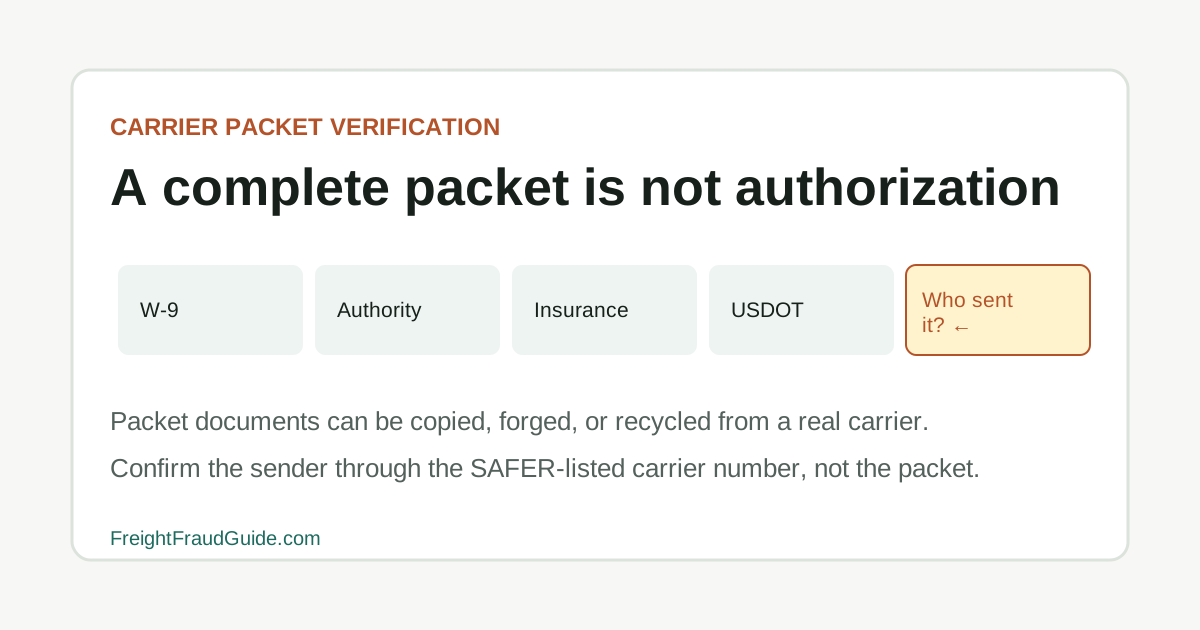
FMCSA registers motor carriers and brokers, but not dispatch services. There is no lookup that confirms a dispatch company is currently authorized to act for a specific carrier on a specific load. The only verification that exists is a direct call to the carrier's SAFER-listed number, asking whether this dispatcher is authorized. That call is the entire verification — no document substitutes for it.
Key Takeaways
- Check the carrier's current operating status and identifying details in official records.
- Confirm the dispatcher or contact through a known company channel before releasing pickup details.
- Review insurance and packet documents for legal name, address, date, and issuer consistency.
- Compare driver, truck, trailer, and pickup details before the load is released.
What to preserve when a dispatcher is the primary contact for a load
For dispatch service vs carrier identity risk, the useful record is usually the one that shows where dispatcher authority, carrier consent, known contacts, and pickup coordination first entered the file.
That record is stronger when it sits beside the dated lookup, the original message, and a note from the carrier management or pickup team. It is weaker when it has been renamed, cropped, forwarded without headers, or separated from the transaction timeline.
What to preserve when a dispatcher is the primary contact for a load checklist
- Record the name, number, document field, contact path, or instruction tied to dispatcher authority, carrier consent, known contacts, and pickup coordination.
- Keep the original file or message before saving a marked-up copy.
- Add the source URL, access date, sender identity, and who confirmed or contradicted the detail.
When a dispatcher-only thread requires a carrier management callback
Carrier questions should establish whether the person communicating is authorized for this carrier and this load. In this guide, that starts with dispatcher authority, carrier consent, known contacts, and pickup coordination.
When pickup staff sees different equipment or a different driver, the answer needs to come from a known carrier channel. Keep the question practical: what changed, who introduced it, and which dated record can be saved before anyone acts on it.
When a dispatcher-only thread requires a carrier management callback checklist
- Who at the carrier authorized this dispatcher?
- Which driver and equipment are assigned?
- Does the packet match the official carrier record?
- Who should the shipper call if pickup details change?
When to hold the pickup and escalate
Hold release when the carrier identity cannot be connected to the dispatcher, driver, or equipment at pickup. In this guide, that starts with dispatcher authority, carrier consent, known contacts, and pickup coordination.
Escalation may mean contacting carrier management, the broker, the shipper, an insurer, or law enforcement if freight is already at risk. Keep the question practical: what changed, who introduced it, and which dated record can be saved before anyone acts on it.
When to hold the pickup and escalate checklist
- The carrier denies the dispatch contact.
- Pickup equipment differs from the confirmed record.
- Insurance or authority details cannot be reconciled.
- The driver requests release under a different carrier name.
Source Notes
Source context for Dispatch Service vs Carrier Identity Risk
For carrier-verification topics, start with FMCSA SAFER at safer.fmcsa.dot.gov. The Company Snapshot provides USDOT status, operating authority, insurance, and contact information for registered U.S. carriers. SAFER confirms the registered identity — it does not confirm that a dispatcher, driver, or packet presenter is authorized by that carrier for a specific load.
FAQ
If I've worked with a dispatcher before, do I still need to confirm carrier authorization each load?
Yes. A dispatcher may represent multiple carriers, and their authorization to act for a specific carrier on a specific load should be confirmed through the carrier's management each time, not assumed from prior loads.
How do I confirm that a dispatcher is actually authorized by the carrier they claim to represent?
Call the carrier's management directly through a contact independent of the dispatcher — the SAFER-listed number or a prior established line. Ask whether they authorize this dispatcher by name to act on their behalf for this specific load. The dispatcher can be part of the conversation, but the confirmation needs to come from a carrier contact established outside the dispatcher's own chain of communication.
If a carrier's dispatcher changes between loads, should I re-verify the new dispatcher?
Yes. A new dispatcher means a new contact whose authorization needs to be confirmed the same way as the original. A dispatcher you've worked with previously may no longer be authorized for that carrier, or may now be acting for a different operation. Each new dispatcher contact is a fresh authorization question.
Source References
- Broker and Carrier Fraud and Identity Theft Federal Motor Carrier Safety Administration. primary source. Last checked 2026-06-01. FMCSA guidance on broker and carrier fraud, unauthorized USDOT use, suspicious links, SAFER phone comparison, NCCDB, OIG, FTC, and IC3 reporting pointers.
- SAFER Company Snapshot Federal Motor Carrier Safety Administration. primary source. Last checked 2026-06-03. Official Company Snapshot lookup. Treat as a current record check, not a guarantee of transaction authority.