
How this comes up in practice
A load posting that combines an above-market rate, a legitimate broker's MC number, and a contact email that differs by one character from the broker's actual domain is one of the more consistent patterns seen on load boards. The MC number in the posting belongs to a real company; the person who created the posting is not from that company. The verification that catches this before a packet goes out: checking the contact email domain character by character against the broker's confirmed domain from a prior source, and calling the broker's main office to ask whether they posted that specific load. Saving a screenshot of the posting — including the full URL and contact details — before responding preserves the record in case the posting is later edited or removed.
The verification gap between a load board post and a confirmed transaction
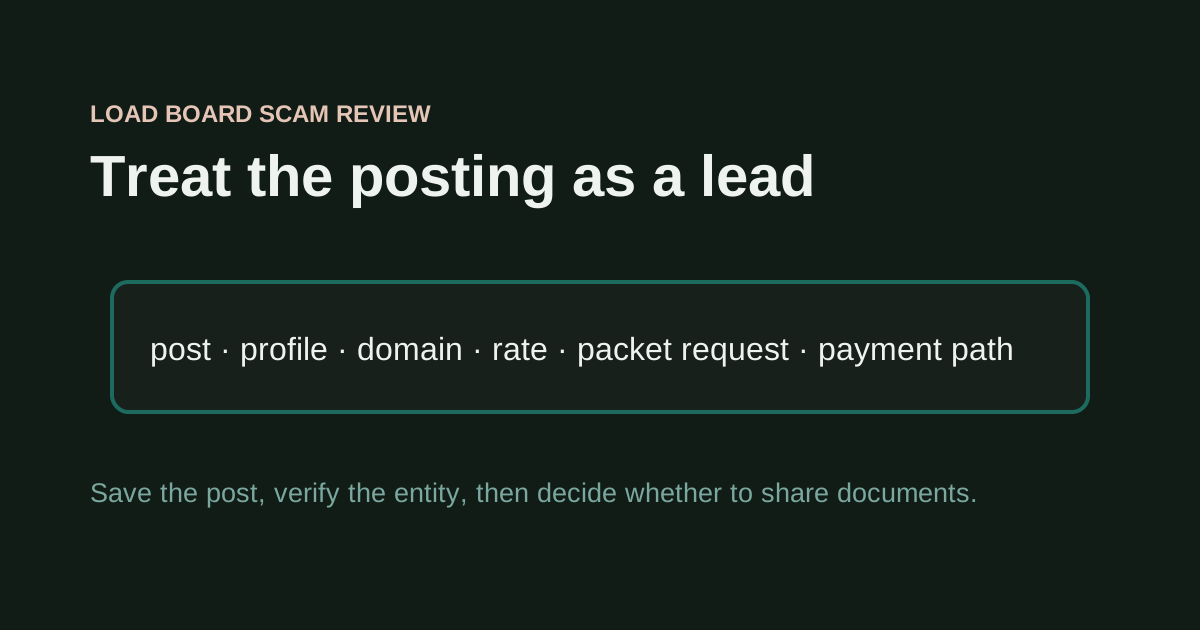
A load board posting is a lead — a starting point for a potential transaction, not a verified offer from a confirmed party. The broker MC number, company name, and load details in a posting may all be accurate while the person who created the posting has no connection to the entity those details belong to. For adjacent verification steps, compare this with Fake Load Posting Checklist, Email Spoofing in Load Boards, and Domain Lookalike Checklist.
This gap is structural: load board platforms verify accounts at setup and periodically, but they can't confirm in real time that a posting came from someone authorized to make it on behalf of the company named. An MC number can be looked up from public records. A company name and load details can be copied from legitimate communications. The combination is sufficient to create a convincing posting.
The verification that closes the gap is external to the load board: a check of the broker's MC number in FMCSA L&I, and a call to the phone number from that record — not from the posting. A broker whose identity can be confirmed through both steps is a broker whose posting is worth responding to. The posting itself, however accurate its details, isn't the verification.
Key Takeaways
- Load board screenshot
- Message thread
- Rate confirmation
- Broker lookup records
- Carrier packet request
- Payment instructions
What to verify before responding to a posting
Before responding to a post, verify the broker or carrier identity behind it.
Scam risk increases when a post combines high urgency, unusual rate, missing details, and a new communication channel.
What to verify before responding to a posting checklist
- Save the posting.
- Compare broker identity.
- Verify email domain and phone.
Load board records to save before acting
For this workflow, build the file around load board screenshot and message thread. Keep the first version separate from later corrections so the sequence remains clear.
Load board records to save before acting checklist
- Load board screenshot
- Message thread
- Rate confirmation
- Broker lookup records
- Carrier packet request
- Payment instructions
Load board signals worth a verification call
Treat "Rate far above typical conditions" as a reason to slow the transaction and document a call-back. It is not, by itself, a public accusation or final finding.
Load board signals worth a verification call checklist
- Rate far above typical conditions
- Poster avoids official contact
- Domain lookalike
- Packet requested before basic verification
- Pickup details withheld until documents are sent
Questions a load board posting should prompt
Start with the question "Who controls the posting account?" and tie the answer to a record, known contact, or dated instruction.
Questions a load board posting should prompt checklist
- Who controls the posting account?
- Can the broker verify through a known channel?
- Why is the rate or timing unusual?
- What documents are actually needed before booking?
Load board assumptions to avoid
The main trap here is assuming too much from an incomplete file. In particular: Do not assume platform login means identity is confirmed.
Load board assumptions to avoid checklist
- Do not assume platform login means identity is confirmed.
- Do not assume a familiar company logo is authorized.
- Do not assume deleted posts can be recovered.
Official records to verify against a posting
Use FMCSA fraud guidance as a comparison point and save the lookup date. Official status can change, and legitimate company records can be impersonated.
Official records to verify against a posting checklist
- FMCSA fraud guidance
- FMCSA fraud alerts
- IC3
- FBI BEC guidance
When a load board concern requires escalation
Escalate when the file reaches a concrete unresolved point, such as: Posting identity cannot be confirmed. Preserve the evidence and move the question to the right internal, insurance, legal, law-enforcement, or official reporting channel.
When a load board concern requires escalation checklist
- Posting identity cannot be confirmed.
- A spoofed domain or payment change appears.
- A profile may be hijacked.
Source Notes
A load board post is not verification
Treat marketplace information as a lead. Verify the party behind the post before sharing packet documents, pickup details, or payment information.
FAQ
Is it safe to share our carrier packet when responding to a load board posting?
Only after the broker's identity has been confirmed through official records and an independent contact — not just the posting. Carrier packets contain sensitive information that can be reused for identity fraud. Confirm the broker first.
Does a high positive rating on a load board mean a broker posting there is legitimate?
A rating reflects historical transactions on that platform and can be inflated. It also doesn't account for recent profile takeovers or identity misuse that may have occurred after the rating was established. Treat the rating as background context — a call to the broker's main number using an independently confirmed contact is the verification that matters.
What should I do with a suspicious posting before deciding whether to respond?
Screenshot the full posting — URL, date, contact information, rate, and load details — before responding or before the posting is edited or removed. Keep the screenshot regardless of whether you proceed. It's the record of what was presented at the time, and it's not recoverable once the posting changes.
Source References
- Broker and Carrier Fraud and Identity Theft Federal Motor Carrier Safety Administration. primary source. Last checked 2026-06-01. FMCSA guidance on broker and carrier fraud, unauthorized USDOT use, suspicious links, SAFER phone comparison, NCCDB, OIG, FTC, and IC3 reporting pointers.
- Internet Crime Complaint Center Federal Bureau of Investigation. primary source. Last checked 2026-05-15. Official IC3 entry point. Use the official domain directly to reduce spoofed reporting-site risk.
- Fraud Alerts Federal Motor Carrier Safety Administration. primary source. Last checked 2026-06-04. FMCSA alert page for phishing attempts, spoofed portals, fake notices, SAFER impersonation, and registration-related scams.
- Business Email Compromise Federal Bureau of Investigation. primary source. Last checked 2026-05-15. FBI BEC guidance for email impersonation and payment-direction risk. Useful for spoofed freight email workflows.