
How this comes up in practice
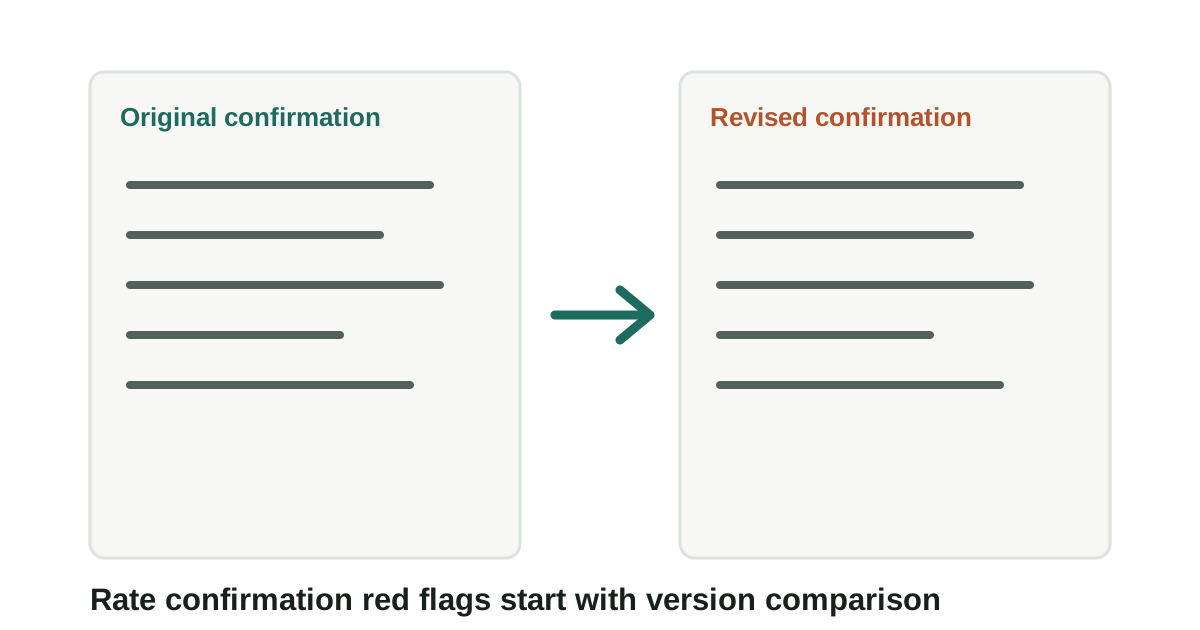
A rate confirmation can carry an inconsistency in one section while everything else appears to match. The version that most often goes unnoticed: the broker name, shipper details, and rate are all correct, but the MC number in the payment terms section belongs to a different entity than the one in the header — a factoring company, a related entity, or something without a clear connection to the broker. Reading the payment section against the broker's L&I record before dispatch, rather than only confirming the rate and shipper details, is what catches the mismatch before freight moves rather than when the invoice is disputed. The payment terms section carries as much verification weight as the header.
How the rate confirmation functions in a freight transaction
A rate confirmation establishes the agreed terms between a broker and carrier for a specific load: the parties, the lane, the commodity, the rate, and the payment terms. It doesn't verify the broker's authority, the carrier's insurance, or that the pickup will proceed as described. It establishes the stated terms as of the moment it was issued. For adjacent verification steps, compare this with Fake Rate Confirmation Warning Signs, Shipper-Broker-Carrier Document Trail, and How to Verify a Freight Broker.
A rate confirmation red flag — a missing MC number, a carrier name mismatch, a changed payment entity — isn't proof of fraud. It's a discrepancy that needs to be resolved before the load moves. Resolution comes from external confirmation: a call to the broker's known contact, a comparison against official FMCSA records, or a verified instruction from a party whose authorization is established.
The rate confirmation review is most useful when done before dispatch — before pickup details are released to a driver, before the shipper is given a carrier name, before payment terms become the basis for an invoice. The review that happens after something goes wrong is working with a window that has already closed.
Key Takeaways
- Original rate confirmation
- Revised rate confirmations
- Load board posting
- Broker and carrier records
- Payment instruction record
- BOL after pickup
What to review in the rate confirmation before dispatch
Read the rate confirmation before dispatch and compare it to the email, load board post, broker record, carrier identity, shipper, and payment terms.
The review should happen before pickup details are released.
What to review in the rate confirmation before dispatch checklist
- Check broker MC number.
- Confirm shipper and pickup number.
- Compare carrier name and payment instructions.
Rate confirmation records to save
For this workflow, build the file around original rate confirmation and revised rate confirmations. Keep the first version separate from later corrections so the sequence remains clear.
Rate confirmation records to save checklist
- Original rate confirmation
- Revised rate confirmations
- Load board posting
- Broker and carrier records
- Payment instruction record
- BOL after pickup
Rate confirmation signals worth a call-back
Treat "Missing broker MC number" as a reason to slow the transaction and document a call-back. It is not, by itself, a public accusation or final finding.
Rate confirmation signals worth a call-back checklist
- Missing broker MC number
- Shipper name missing
- Carrier name mismatch
- Rate far above typical conditions
- Payment instruction change
- Unusual contact pattern
Questions the rate confirmation should answer
Start with the question "Who issued this document?" and tie the answer to a record, known contact, or dated instruction.
Questions the rate confirmation should answer checklist
- Who issued this document?
- Which known contact confirms the load?
- What changed from the original version?
- Does shipper release match the named carrier?
Rate confirmation assumptions to avoid
The main trap here is assuming too much from an incomplete file. In particular: Do not assume a signed PDF is authentic.
Rate confirmation assumptions to avoid checklist
- Do not assume a signed PDF is authentic.
- Do not assume a high rate is automatically fraud.
- Do not assume the first version was superseded unless the change is confirmed.
Official records to compare the rate confirmation against
Use FMCSA fraud guidance as a comparison point and save the lookup date. Official status can change, and legitimate company records can be impersonated.
Official records to compare the rate confirmation against checklist
- FMCSA fraud guidance
- FMCSA fraud alerts
- FBI BEC guidance
When a rate confirmation concern requires escalation
Escalate when the file reaches a concrete unresolved point, such as: A mismatch affects pickup release. Preserve the evidence and move the question to the right internal, insurance, legal, law-enforcement, or official reporting channel.
When a rate confirmation concern requires escalation checklist
- A mismatch affects pickup release.
- Payment instructions changed last minute.
- Known broker or carrier contact denies the document.
Source Notes
Rate red flags connect to identity and payment risk
FMCSA flags excessive rates, false carrier names, blind-load pressure, and document examination. FBI BEC guidance supports caution around payment-instruction changes.
FAQ
If I notice rate confirmation issues after booking, what should I do?
Contact the broker through a known channel to clarify before pickup. If a key identifier is missing or a carrier name differs, ask for a corrected document and document that you requested it. Do not proceed with ambiguous documents.
What should I do with the original rate confirmation if a revised version arrives?
Keep both versions as separate files, neither renamed nor overwritten. Note which you're treating as controlling and document why — whether from a confirmed callback or written instruction from a verified contact. The original is the baseline record of what was agreed before any change, and it matters if the revision is later disputed.
Is a rate confirmation valid without a broker MC number on it?
It's incomplete. Without a verifiable MC number, the document can't be checked against FMCSA records, and any identity or payment dispute becomes harder to resolve. Ask for a corrected version with the MC number before dispatch, and document that you requested it — the request itself is part of the verification record.
Source References
- Broker and Carrier Fraud and Identity Theft Federal Motor Carrier Safety Administration. primary source. Last checked 2026-06-01. FMCSA guidance on broker and carrier fraud, unauthorized USDOT use, suspicious links, SAFER phone comparison, NCCDB, OIG, FTC, and IC3 reporting pointers.
- Cargo Theft Federal Bureau of Investigation. primary source. Last checked 2026-05-15. FBI overview of cargo theft, including strategic theft trends such as identity theft, fictitious pickup, account takeover, double brokering scams, and fraudulent carriers.
- Fraud Alerts Federal Motor Carrier Safety Administration. primary source. Last checked 2026-06-04. FMCSA alert page for phishing attempts, spoofed portals, fake notices, SAFER impersonation, and registration-related scams.
- Business Email Compromise Federal Bureau of Investigation. primary source. Last checked 2026-05-15. FBI BEC guidance for email impersonation and payment-direction risk. Useful for spoofed freight email workflows.