
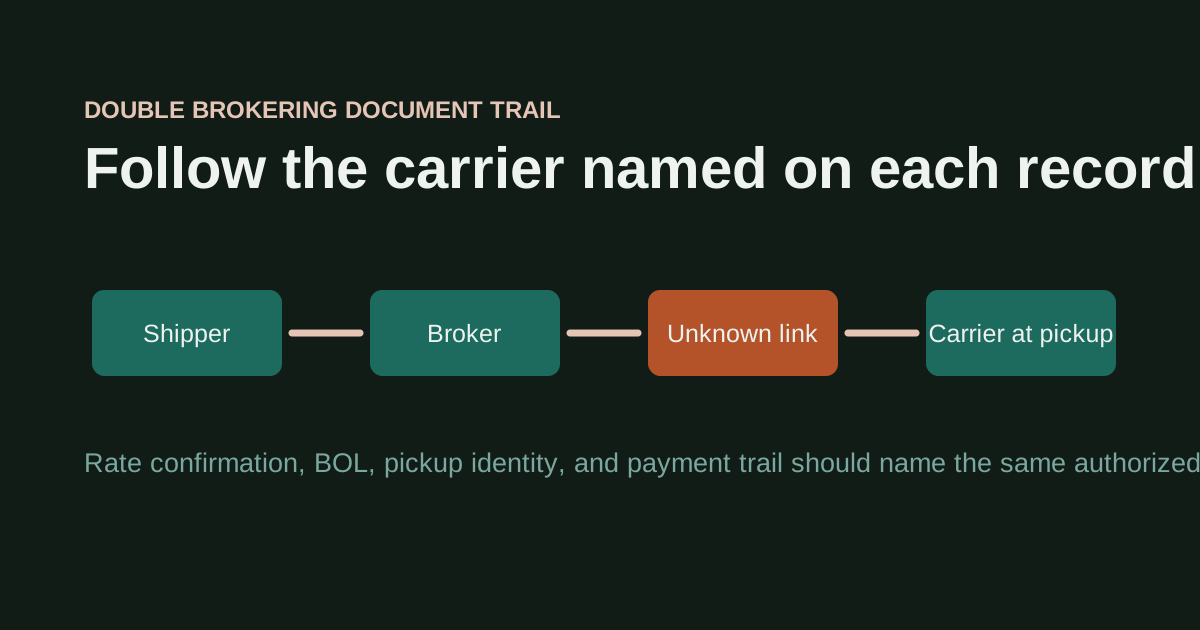
How this comes up in practice
A freight transaction that ended in a cargo loss came down to a gap no one checked: the carrier assigned on the rate confirmation and the driver who arrived at the dock both had paperwork that looked consistent with the load. The shipper released the freight because the pickup number matched and the driver knew the delivery address. What the shipper didn't verify — because there was no established protocol for it — was whether the carrier named on the rate confirmation had any knowledge of this load. A call to the carrier's SAFER-listed number, made before release, would have revealed that they didn't. The pickup number had been obtained through a compromised email account; the driver had no connection to the carrier. The paperwork was internally consistent; the authorization wasn't there. That gap — between records that look right and authorization that hasn't been confirmed — is the thread running through freight fraud patterns, regardless of whether the presenting party is impersonating a broker, a carrier, or both.
How official guidance frames the freight fraud problem
FMCSA's guidance on broker and carrier fraud identifies several overlapping categories: unauthorized USDOT number use, broker impersonation, fictitious pickups, double brokering without shipper consent, and identity theft affecting legitimate carriers and brokers. In practice these patterns often appear together in the same transaction — a fictitious pickup may involve a stolen USDOT number and a broker impersonation simultaneously. For adjacent verification steps, compare this with Carrier Identity Theft Explained, and How to Report Freight Fraud.
What connects these patterns is misrepresentation at a point where the affected party had no obvious reason to suspect it. The carrier, broker, or shipper typically has all the information they would normally rely on — the documents look right, the numbers check out, the communication is professional. Standard verification catches the problem; verification that stops one step short of the independent contact or official record comparison doesn't.
This guide focuses on document-level and contact-level verification because that's where the misrepresentations surface. An official FMCSA record that doesn't match the document in hand, or a contact that can't be confirmed through a channel the presenting party didn't introduce, is the signal that the transaction needs a slower look.
Key Takeaways
- Identify the party that first introduced the load or document.
- Write down each legal name, DBA, MC number, USDOT number, email domain, and phone number.
- Compare the transaction record against official FMCSA records and the documents exchanged.
- Pause when one party asks you to ignore a mismatch or move communication to a new channel.
How freight fraud shows up in common transaction patterns
Freight fraud shows up differently depending on which side of a transaction you're on. A carrier may receive a convincing load offer that leads to an unpaid or stolen shipment. A broker may release a carrier packet only to find the documents belonged to a legitimate company with no involvement in the load. A shipper may pay an invoice while freight was picked up by someone with no authorization for that load. What connects these patterns is misrepresentation — a name, number, document, or instruction that wasn't what it appeared to be. FMCSA has issued formal fraud alerts addressing identity theft, double brokering, fictitious pickup, and payment redirection as documented patterns in U.S. trucking, and the FBI Internet Crime Complaint Center (IC3) processes freight-related business email compromise reports as part of its annual BEC tracking.
The most practical first response to a suspected fraud pattern is to slow down, pull the original documents, and compare what was communicated against what official records show. This guide introduces the most common patterns and the records most useful for that comparison.
How freight fraud shows up in common transaction patterns checklist
- Identity of every party that introduced the load or document, with the credentials each provided
- Documents exchanged before pickup, including any revisions and who sent each version
- Official FMCSA records for each named party, checked at the time of the concern
- Payment instructions and any changes, with the date and contact associated with each
- Communications showing who asked for what and when
Patterns that surface in records and contacts
Start with the identity trail: the first message, the company name used there, and the MC or USDOT number that later appears in documents. In this guide, that starts with fraud patterns that use false identities, incomplete documents, or rushed contact changes.
A pattern becomes easier to evaluate when each name, number, domain, and phone number is tied to the moment it entered the file. Keep the question practical: what changed, who introduced it, and which dated record can be saved before anyone acts on it.
Patterns that surface in records and contacts checklist
- Identify the party that first introduced the load or document.
- Write down each legal name, DBA, MC number, USDOT number, email domain, and phone number.
- Compare the transaction record against official FMCSA records and the documents exchanged.
- Pause when one party asks you to ignore a mismatch or move communication to a new channel.
What to capture when a transaction pattern seems off
For what is freight fraud, the useful record is usually the one that shows where fraud patterns that use false identities, incomplete documents, or rushed contact changes first entered the file.
That record is stronger when it sits beside the dated lookup, the original message, and a note from the party connected to the transaction. It is weaker when it has been renamed, cropped, forwarded without headers, or separated from the transaction timeline.
What to capture when a transaction pattern seems off checklist
- Record the name, number, document field, contact path, or instruction tied to fraud patterns that use false identities, incomplete documents, or rushed contact changes.
- Keep the original file or message before saving a marked-up copy.
- Add the source URL, access date, sender identity, and who confirmed or contradicted the detail.
Questions that separate a mismatch from an innocent gap
Hold the booking, dispatch, pickup, or payment decision when the file depends on a new contact path, revised document, missing official record, or mismatch that no one has explained.
The pause should be narrow and written down: the field that does not line up, the source used to check it, and the person or channel that must answer before the work continues.
Questions that separate a mismatch from an innocent gap checklist
- Name the exact field or instruction that does not line up.
- Save the document version or message that introduced the mismatch.
- Check the official or independently known source before using the new detail.
- Record the confirmation result before continuing.
What official records establish versus what they leave open
For basic fraud-pattern review, preserve the earliest version of each document before later corrections blur the timeline. In this guide, that starts with fraud patterns that use false identities, incomplete documents, or rushed contact changes.
Keep the documents beside the message thread that introduced them, because the sequence often matters more than a single mismatch. Keep the question practical: what changed, who introduced it, and which dated record can be saved before anyone acts on it.
What official records establish versus what they leave open checklist
- First email or load board message
- Original and revised rate confirmations
- Carrier or broker packet as received
- Official lookup screenshots with dates
- Call notes showing who confirmed or denied the details
When a pattern warrants slowing the transaction
Ask questions that separate an operational mistake from an identity concern without accusing a party too early. In this guide, that starts with fraud patterns that use false identities, incomplete documents, or rushed contact changes.
Good answers point to a record, a known contact, or a dated confirmation rather than a general assurance. Keep the question practical: what changed, who introduced it, and which dated record can be saved before anyone acts on it.
When a pattern warrants slowing the transaction checklist
- Who first introduced the load or document?
- Which legal entity is named in the official record?
- Which contact channel existed before this transaction?
- What changed between the first document and the current instruction?
Further context on fraud recognition
Fraud basics are most useful when they slow down conclusions. A familiar brand, correct MC number, or polished packet can still be used by an unauthorized sender. In this guide, that starts with fraud patterns that use false identities, incomplete documents, or rushed contact changes.
The safer habit is to write down the gap and the check it triggered, then decide whether the records resolved it. Keep the question practical: what changed, who introduced it, and which dated record can be saved before anyone acts on it.
Further context on fraud recognition checklist
- Do not treat a warning sign as a finding.
- Do not assume the sender controls the company name they use.
- Do not rely on search snippets as official records.
- Do not skip preservation because the issue seems minor.
When to escalate the concern
Escalation begins when the file still has an identity gap after ordinary confirmation steps. In this guide, that starts with fraud patterns that use false identities, incomplete documents, or rushed contact changes.
Move the issue to an internal lead, known company contact, insurer, law-enforcement contact, or official reporting channel based on what the records show. Keep the question practical: what changed, who introduced it, and which dated record can be saved before anyone acts on it.
When to escalate the concern checklist
- The known company contact denies the transaction.
- The same identifier appears with conflicting names or contacts.
- Pickup or payment is imminent and identity remains unresolved.
- The incident involves cyber-enabled access, theft, or identity misuse.
Source Notes
Source context for What Is Freight Fraud?
For fraud-basics topics, FMCSA fraud and identity theft guidance is the primary federal reference. FBI IC3 and FTC cover cyber-enabled and consumer fraud dimensions respectively. These sources establish what documentation matters, what official reporting channels exist, and how to describe patterns without overstating what records can prove. They do not certify any private party or determine fraud findings.
FAQ
If I notice a red flag mid-transaction, should I cancel the load?
Not necessarily. Document the concern and try to confirm identity through an independent channel before canceling. Canceling without documenting makes it harder to report or recover later.
Does freight fraud always involve false documents?
Most patterns do — fraud typically requires false identity information, altered documents, or misleading communication. The earliest signal is often a request to move faster than verification allows, or a contact that can't be confirmed through a channel independent of the current transaction.
What's the difference between freight fraud and a contract dispute?
A contract dispute involves disagreement over terms or performance between parties whose identities are established. Fraud involves misrepresentation of identity, authority, or documents — often before any contract is formed. The distinction matters for which official channels and remedies apply.
Source References
- Broker and Carrier Fraud and Identity Theft Federal Motor Carrier Safety Administration. primary source. Last checked 2026-06-01. FMCSA guidance on broker and carrier fraud, unauthorized USDOT use, suspicious links, SAFER phone comparison, NCCDB, OIG, FTC, and IC3 reporting pointers.
- Cargo Theft Federal Bureau of Investigation. primary source. Last checked 2026-05-15. FBI overview of cargo theft, including strategic theft trends such as identity theft, fictitious pickup, account takeover, double brokering scams, and fraudulent carriers.