
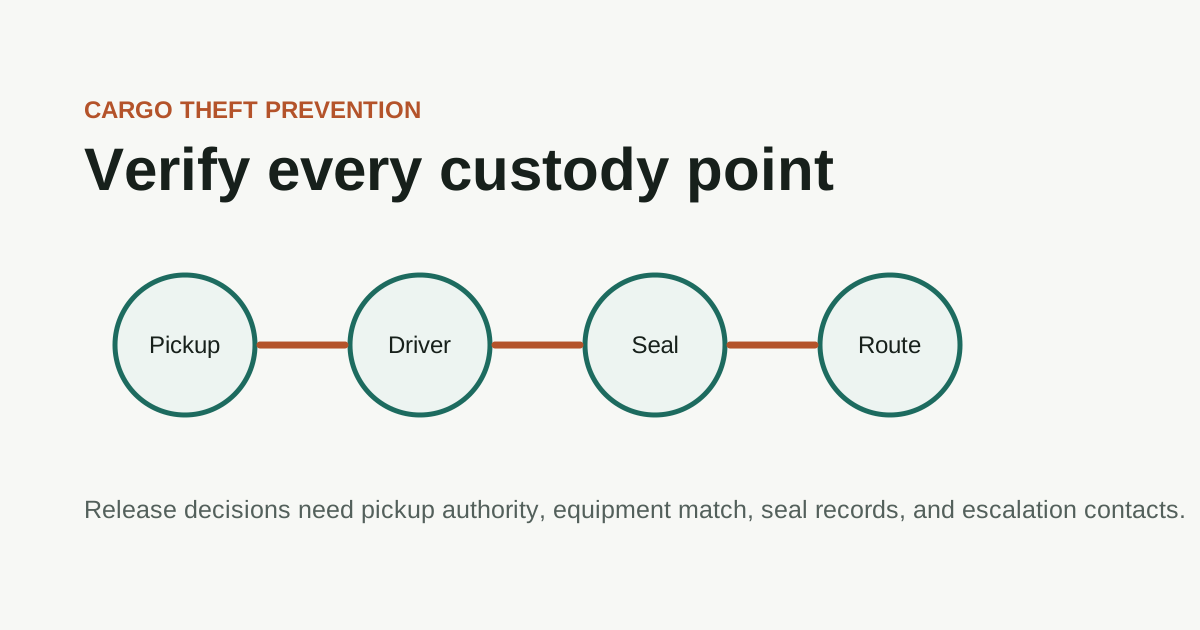
How this comes up in practice
The situation cargo theft prevention procedures are designed to catch: a driver arrives at a shipper facility with the correct pickup number, the right commodity on their paperwork, and no visible reason to delay release. The pickup number was obtained through a compromised email account rather than through the carrier's actual dispatch operation. A call to the carrier's main number — using a contact confirmed before the load was tendered — asking whether this driver and this truck were dispatched for this specific load is the check that surfaces the mismatch. A 'no' answer before freight is released is a recoverable situation. The same answer after the truck has left the dock is not.
Why prevention happens at a different point than most freight decisions
Most freight verification decisions happen at the beginning of a transaction — when a broker is selected, when a carrier is onboarded, when a rate confirmation is reviewed. Cargo theft prevention is different because the critical window is at the end of that process, when freight is physically about to change hands. For adjacent verification steps, compare this with Pickup Verification Checklist, Seal Number Checklist, and High-Risk Freight Types.
A shipper facility that has completed all standard verification steps can still release freight to the wrong driver if the final check at the dock doesn't happen. A driver arriving with the correct pickup number and a BOL doesn't confirm authorization; it confirms someone has the right reference. Authorization comes from carrier management confirming the specific dispatch — and that requires a separate call at or near the dock.
This is why cargo theft prevention procedures operate separately from general freight verification. They address a different risk at a different moment, and the people executing them are often different from those who did the earlier verification steps. The dock-level check is where the prevention workflow actually does its work.
Key Takeaways
- Rate confirmation
- Carrier packet
- Pickup number
- Driver ID record per shipper policy
- Truck/trailer details
- Seal record
- Tracking notes
- BOL and POD
What to confirm before releasing freight
Verify the party picking up the load before freight is released.
The strongest prevention work happens at tender, dispatch, pickup, route changes, and delivery.
What to confirm before releasing freight checklist
- Confirm carrier and driver.
- Record truck and trailer.
- Use seal and route procedures.
Pickup and transit records to document
For this workflow, build the file around rate confirmation and carrier packet. Keep the first version separate from later corrections so the sequence remains clear.
Pickup and transit records to document checklist
- Rate confirmation
- Carrier packet
- Pickup number
- Driver ID record per shipper policy
- Truck/trailer details
- Seal record
- Tracking notes
- BOL and POD
Pickup signals worth holding the load
Treat "Different carrier arrives" as a reason to slow the transaction and document a call-back. It is not, by itself, a public accusation or final finding.
Pickup signals worth holding the load checklist
- Different carrier arrives
- Pickup number shared through unconfirmed channel
- Driver cannot identify dispatch contact
- Route change without approval
- Seal mismatch
Cargo release assumptions to avoid
The main trap here is assuming too much from an incomplete file. In particular: Do not assume a pickup number alone authorizes release.
Cargo release assumptions to avoid checklist
- Do not assume a pickup number alone authorizes release.
- Do not assume high-value freight is the only theft target.
- Do not assume weekend parking is low risk.
Official cargo theft resources
Use FBI cargo theft as a comparison point and save the lookup date. Official status can change, and legitimate company records can be impersonated.
Official cargo theft resources checklist
- FBI cargo theft
- FMCSA fraud guidance
- SAFER
- IC3 for cyber-enabled elements
When to hold freight and escalate
Escalate when the file reaches a concrete unresolved point, such as: Driver or equipment mismatch at pickup. Preserve the evidence and move the question to the right internal, insurance, legal, law-enforcement, or official reporting channel.
When to hold freight and escalate checklist
- Driver or equipment mismatch at pickup.
- Load location or contact changes unexpectedly.
- Freight is missing, diverted, or unreachable.
Source Notes
Cargo theft prevention is custody-focused
FBI cargo theft guidance identifies strategic theft patterns including identity theft, fictitious pickups, account takeovers, double brokering scams, and fraudulent carriers.
FAQ
What should a shipper do if pickup staff realizes they already released freight to an unauthorized driver?
Notify the broker and the legitimate carrier immediately through known lines. Preserve any footage, entry logs, BOL copies, and driver-presented documents. Contact law enforcement where the facts warrant it, notify your insurer, and consider IC3 reporting if there was a cyber-enabled element.
Does cargo insurance replace the need for pickup verification procedures?
They serve different functions. Insurance provides financial recovery after a loss occurs. Pickup verification prevents the loss from occurring. A cargo claim process is slower, more uncertain, and more costly for all parties than a hold at pickup that surfaces a problem before freight changes hands.
What should a driver do if pickup instructions change after they've already departed for the shipper?
Contact the dispatcher through a known line — not a new text or call from an unfamiliar number — to confirm the change in writing before altering the route. Do not update routing based on a message from an unverified source while in transit. Document the original instructions and the change request in the load file.
Source References
- Cargo Theft Federal Bureau of Investigation. primary source. Last checked 2026-05-15. FBI overview of cargo theft, including strategic theft trends such as identity theft, fictitious pickup, account takeover, double brokering scams, and fraudulent carriers.
- Broker and Carrier Fraud and Identity Theft Federal Motor Carrier Safety Administration. primary source. Last checked 2026-06-01. FMCSA guidance on broker and carrier fraud, unauthorized USDOT use, suspicious links, SAFER phone comparison, NCCDB, OIG, FTC, and IC3 reporting pointers.
- Internet Crime Complaint Center Complaint Form Federal Bureau of Investigation. primary source. Last checked 2026-05-15. Official IC3 complaint form for cyber-enabled incidents. Not a substitute for emergency response.
- SAFER Company Snapshot Federal Motor Carrier Safety Administration. primary source. Last checked 2026-06-03. Official Company Snapshot lookup. Treat as a current record check, not a guarantee of transaction authority.