
How this comes up in practice
Pickup verification fails most often not because the steps are unknown, but because one or two are skipped under time pressure. A driver arrives, the pickup number matches, the BOL is presented, and the load is released without a call to the carrier's management to confirm the driver was actually dispatched. In most fictitious pickup situations, the pickup number was legitimately issued but obtained through unauthorized access to an email account or a general shipper line. The pickup number confirms someone has the right reference; it does not confirm the driver presenting it is the one the carrier dispatched. Calling the carrier's main number — using a contact confirmed before the load was tendered, not a number from the driver — and asking whether this driver and this truck are assigned to this specific pickup is what converts a reference check into an authorization check.
Why pickup verification is a distinct workflow from carrier onboarding
Carrier verification happens during booking and onboarding — days or weeks before a specific pickup. Pickup verification happens at the dock, in the minutes before freight changes hands. These address different risks at different times. A carrier that passed full onboarding verification may still send a different driver or truck than was dispatched; pickup verification catches that. For adjacent verification steps, compare this with Driver Identity Verification at Pickup, Cargo Theft Prevention Checklist, and Bill of Lading Red Flags.
Carrier onboarding confirms that a registered entity with active authority and appropriate insurance exists. Pickup verification confirms that the specific driver and truck at the dock were sent by that entity for this specific load. The earlier check is necessary but doesn't make the later check redundant. They answer different questions.
The pickup verification process that provides real protection is one applied consistently rather than selectively. A process applied only to suspicious situations misses the cases that don't look suspicious — which is how most strategic cargo theft works. Confirming the pickup number through carrier management, matching the driver and truck to the dispatch record, and documenting both takes under five minutes when it's a standard step.
Key Takeaways
- Verify the driver, carrier, truck, trailer, and pickup number before releasing freight.
- Record seal numbers and exceptions at pickup, transfer points, and delivery.
- Use planned communication and stop procedures for sensitive freight.
- Escalate immediately when contact details, routing, or delivery instructions change unexpectedly.
The verification sequence before freight changes hands at pickup
Pickup verification is the last physical checkpoint before freight changes hands. Most of what can go wrong in a cargo theft or identity fraud situation becomes significantly harder to prevent once a driver has the freight loaded and leaves the facility. The window to catch a discrepancy is the few minutes between the driver's arrival and freight release. FMCSA's fraud guidance specifically names fictitious pickup — where a fraudster presents as an authorized carrier and loads freight with full shipper cooperation — as one of the most documented freight theft patterns, precisely because it succeeds when pickup verification is skipped or abbreviated.
A pickup verification process doesn't need to be elaborate, but it does need to be consistent. The driver and equipment showing up should match what the broker or carrier dispatched. The pickup number should have been issued to a confirmed carrier contact — not handed out to anyone who called asking for it.
The verification sequence before freight changes hands at pickup checklist
- Whether the pickup number was issued to the confirmed carrier contact, not provided to an unverified caller
- Whether the driver's name and carrier company match the broker's dispatch record for this load
- Whether the truck and trailer number match what the carrier's management dispatched
- Whether a direct call-back to the carrier's main office confirms the driver before freight release
- Whether the BOL is signed with the driver's full name and any discrepancies or exceptions are noted before release
Records to confirm before releasing freight at the dock
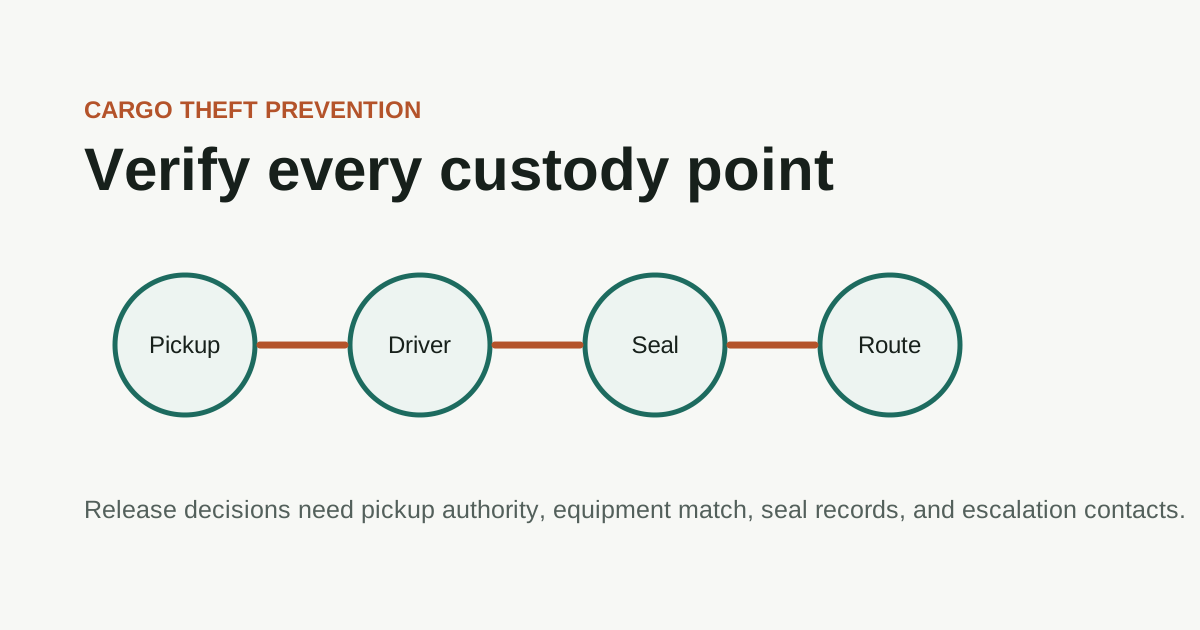
Cargo theft prevention ties identity checks to custody points: pickup, stops, seal changes, route exceptions, and delivery. In this guide, that starts with pickup numbers, driver ID, truck details, carrier name, seal records, and call-backs.
The file should show not only who was assigned, but who actually took control of the freight and under what release instruction. Keep the question practical: what changed, who introduced it, and which dated record can be saved before anyone acts on it.
Records to confirm before releasing freight at the dock checklist
- Verify the driver, carrier, truck, trailer, and pickup number before releasing freight.
- Record seal numbers and exceptions at pickup, transfer points, and delivery.
- Use planned communication and stop procedures for sensitive freight.
- Escalate immediately when contact details, routing, or delivery instructions change unexpectedly.
What to document at the dock before freight leaves
For pickup verification checklist, the useful record is usually the one that shows where pickup numbers, driver ID, truck details, carrier name, seal records, and call-backs first entered the file.
That record is stronger when it sits beside the dated lookup, the original message, and a note from the shipper, warehouse, broker, or carrier security contact. It is weaker when it has been renamed, cropped, forwarded without headers, or separated from the transaction timeline.
What to document at the dock before freight leaves checklist
- Record the name, number, document field, contact path, or instruction tied to pickup numbers, driver ID, truck details, carrier name, seal records, and call-backs.
- Keep the original file or message before saving a marked-up copy.
- Add the source URL, access date, sender identity, and who confirmed or contradicted the detail.
What a pickup number and matching paperwork leave unconfirmed about the driver
Preserve custody records close to the event, while pickup staff, dispatch, and tracking contacts still have fresh details. In this guide, that starts with pickup numbers, driver ID, truck details, carrier name, seal records, and call-backs.
For sensitive freight, communication records and route exceptions can be as important as the BOL. Keep the question practical: what changed, who introduced it, and which dated record can be saved before anyone acts on it.
What a pickup number and matching paperwork leave unconfirmed about the driver checklist
- Pickup authorization and pickup number
- Driver, truck, trailer, and carrier assignment
- BOL, seal record, and route notes
- Tracking gaps or stop exceptions
- Delivery confirmation and shortage or damage notes
When a pre-release dispatch confirmation call changes the outcome
Cargo questions should confirm that the release instruction, carrier identity, driver, and equipment all match before freight leaves the facility. In this guide, that starts with pickup numbers, driver ID, truck details, carrier name, seal records, and call-backs.
If something changes in transit, the contact path should already be written down. Keep the question practical: what changed, who introduced it, and which dated record can be saved before anyone acts on it.
When a pre-release dispatch confirmation call changes the outcome checklist
- Who authorized release at pickup?
- Does the driver and equipment match the confirmed assignment?
- What stops or route exceptions are permitted?
- Who responds if tracking goes silent?
Further context on pickup verification steps
Theft prevention weakens when teams treat pickup as the final verification point. Identity and custody checks need to continue through transit. In this guide, that starts with pickup numbers, driver ID, truck details, carrier name, seal records, and call-backs.
A tracking dot without a response protocol is only a record; it is not a security process. Keep the question practical: what changed, who introduced it, and which dated record can be saved before anyone acts on it.
Further context on pickup verification steps checklist
- Do not assume a pickup number proves authorization.
- Do not assume tracking prevents theft by itself.
- Do not ignore seal or route exceptions.
- Do not wait until delivery to investigate a contact gap.
When to escalate a theft concern
Escalate quickly when freight, identity, route, or contact details deviate from the confirmed plan. In this guide, that starts with pickup numbers, driver ID, truck details, carrier name, seal records, and call-backs.
A theft concern may require internal security, carrier management, shipper notice, insurer contact, law enforcement, or IC3 when cyber-enabled activity is involved. Keep the question practical: what changed, who introduced it, and which dated record can be saved before anyone acts on it.
When to escalate a theft concern checklist
- A different driver or equipment arrives.
- Seal, route, or stop details do not match the plan.
- Tracking goes silent outside the agreed window.
- The load is missing, diverted, or released under disputed authority.
Source Notes
Source context for Pickup Verification Checklist
For cargo theft topics, FBI cargo theft reporting and FMCSA fraud guidance are the primary federal sources. FBI IC3 handles cyber-enabled theft incidents including account takeovers that lead to fictitious pickups. FMCSA fraud guidance addresses fictitious pickup and identity-based cargo theft patterns. Law enforcement and insurers are the primary action channels for active cargo theft situations.
FAQ
What should I do if a driver arrives without a pickup number?
Do not release the freight. Contact the broker through a known line to confirm whether a driver was dispatched and what pickup number was issued. Document that the driver arrived without the number, note their equipment details, and wait for written broker confirmation before releasing.
Can a shipper employee verify the driver without contacting the broker or carrier?
The shipper can confirm what the driver presents — name, carrier name, truck details, pickup number. What the shipper can't confirm without an external call is whether those details match what the broker actually dispatched. That confirmation requires contacting the broker or carrier management through a known line. The shipper's role is the final physical checkpoint; the broker or carrier contact is the authorization source.
What should be done if a driver refuses to wait for a verification callback?
Do not release the freight. A driver's refusal to allow time for a callback is itself a red flag. Document the driver's response, the truck details, the carrier name on the truck, and the pickup number they presented. Contact the broker through a known line to report the situation before making any release decision.
Source References
- Cargo Theft Federal Bureau of Investigation. primary source. Last checked 2026-05-15. FBI overview of cargo theft, including strategic theft trends such as identity theft, fictitious pickup, account takeover, double brokering scams, and fraudulent carriers.
- SAFER Company Snapshot Federal Motor Carrier Safety Administration. primary source. Last checked 2026-06-03. Official Company Snapshot lookup. Treat as a current record check, not a guarantee of transaction authority.