
How this comes up in practice
A carrier books a load based on the rate and the lane. The broker's MC number checks out in L&I. The specific questions that would have surfaced useful information before signing — which legal entity is tendering the load, what is the confirmed shipper name, and what is the pickup appointment time — weren't asked before the rate confirmation was signed. The confirmation arrives with a shipper listed only as a holding company DBA, a pickup appointment marked 'confirm day of — call dispatch,' and payment terms referencing a broker-carrier agreement the carrier never received. When the carrier arrives for pickup, the shipper's dock has no appointment on record for that carrier. The broker's main office, reached through L&I, confirms the load exists but acknowledges the appointment was not confirmed before the rate confirmation was issued. Each missing detail had an answer that would have changed the booking decision or required a delay before signing. The window to ask is before the rate confirmation is executed — that is the only point where the answers are expected and the leverage to require them exists.
Why questions before booking have different leverage than questions after
The window before a rate confirmation is signed is the only point in a freight transaction where every question is easy to ask without implying distrust, and where the answer is expected. A broker who resists providing a shipper name, delivery address, or commodity description before booking is behaving unusually. After the rate confirmation is signed, the same questions can feel like renegotiation — which is why disputes about missing load details are much harder to resolve after the fact than before. For adjacent verification steps, compare this with How to Verify a Freight Broker, and Load Board Scam Red Flags.
Questions before booking also establish what the agreement actually included. A rate confirmation can be specific or vague; the vague version creates disputes about who approved what and when. A carrier who asks for specific payment terms, a named pickup contact, and a confirmed appointment time before signing is creating a record of what was agreed — not just what was offered. That distinction matters when the load delivers and details don't match the documentation.
The questions in this guide are designed to surface the gaps that produce disputes, claims, and verification problems later in the transaction. They're not meant to create friction with brokers operating legitimately — most can answer them without hesitation. They're designed to surface the situations where the hesitation itself is the information.
Key Takeaways
- Check broker authority and financial responsibility in FMCSA Licensing & Insurance.
- Compare the MC number, legal name, address, phone, and email domain against independent records.
- Review the rate confirmation before pickup, including shipper, lane, commodity, and payment terms.
- Save the original email headers, rate confirmation, packet, and payment instructions.
Pre-booking questions that surface missing verification before the load moves
The questions that matter most before booking are the ones that would be hard to answer after pickup. A rushed booking often skips the identity check, the written payment terms, and the shipper contact — three things that become critical if the load goes wrong. Asking them before booking is faster than reconstructing the answers after a dispute.
Good pre-booking questions don't accuse anyone of anything. They ask for records: the MC number and the name it belongs to in FMCSA, the authority status, the payment terms in writing, and the channel to use if anything needs to be confirmed on pickup day. A broker or carrier with nothing to hide will answer these without resistance.
Pre-booking questions that surface missing verification before the load moves checklist
- What MC number should appear on the rate confirmation, and what entity does it belong to in FMCSA records?
- What are the specific payment terms, and who is the named payment recipient?
- Who is the shipper contact for pickup confirmation, and what's the best number to reach them?
- What is the process if the carrier or equipment changes before pickup?
- Which contact and channel should be used for any load-day changes?
Broker records to verify before booking
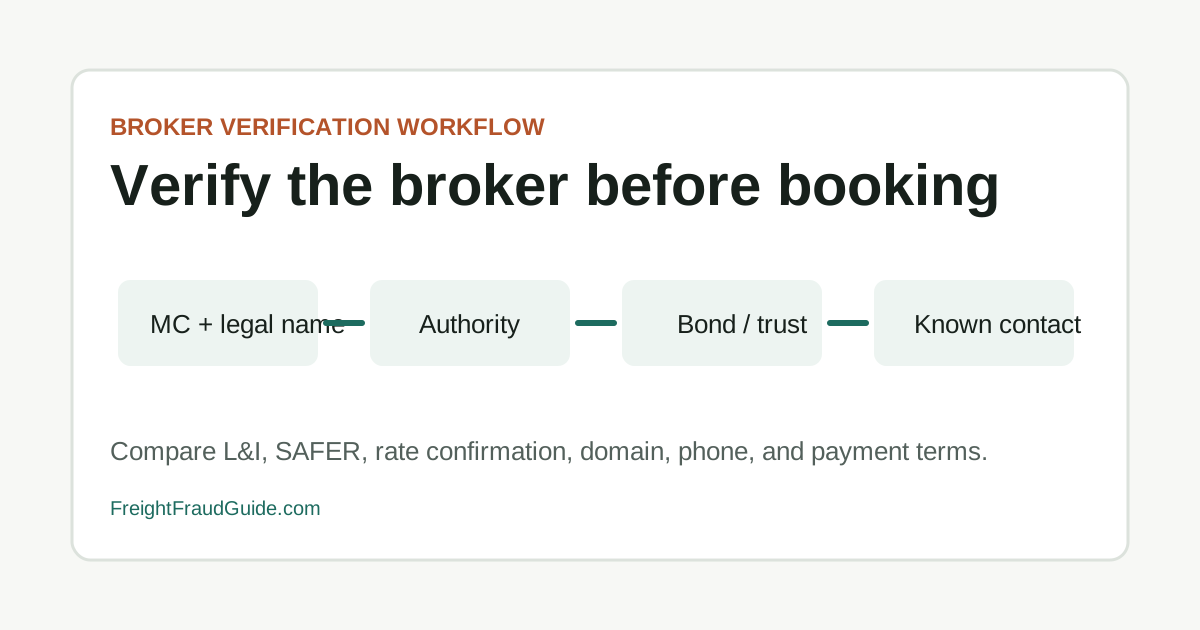
Broker review starts with the entity named on the rate confirmation, then works outward to L&I, SAFER, bond or trust records, and known contact paths. In this guide, that starts with practical questions before accepting a load from a broker or dispatcher.
The useful comparison is not just whether the MC number exists, but whether the current sender, payment terms, and broker record all point to the same entity. Keep the question practical: what changed, who introduced it, and which dated record can be saved before anyone acts on it.
Broker records to verify before booking checklist
- Check broker authority and financial responsibility in FMCSA Licensing & Insurance.
- Compare the MC number, legal name, address, phone, and email domain against independent records.
- Review the rate confirmation before pickup, including shipper, lane, commodity, and payment terms.
- Save the original email headers, rate confirmation, packet, and payment instructions.
Where the broker record helps
For questions to ask before booking a load, the useful record is usually the one that shows where practical questions before accepting a load from a broker or dispatcher first entered the file.
That record is stronger when it sits beside the dated lookup, the original message, and a note from the broker contact or accounting desk. It is weaker when it has been renamed, cropped, forwarded without headers, or separated from the transaction timeline.
Where the broker record helps checklist
- Record the name, number, document field, contact path, or instruction tied to practical questions before accepting a load from a broker or dispatcher.
- Keep the original file or message before saving a marked-up copy.
- Add the source URL, access date, sender identity, and who confirmed or contradicted the detail.
When the broker check should stop
Hold the booking, dispatch, pickup, or payment decision when the file depends on a new contact path, revised document, missing official record, or mismatch that no one has explained.
The pause should be narrow and written down: the field that does not line up, the source used to check it, and the person or channel that must answer before the work continues.
When the broker check should stop checklist
- Name the exact field or instruction that does not line up.
- Save the document version or message that introduced the mismatch.
- Check the official or independently known source before using the new detail.
- Record the confirmation result before continuing.
What to save before the load moves
Save broker records before accepting a revised rate confirmation or changed payment instruction. In this guide, that starts with practical questions before accepting a load from a broker or dispatcher.
Keep each rate confirmation version separate so a later dispute can show exactly which entity tendered the load and when the terms changed. Keep the question practical: what changed, who introduced it, and which dated record can be saved before anyone acts on it.
What to save before the load moves checklist
- Load posting or tender screenshot
- Original rate confirmation and revised versions
- Broker-carrier agreement
- L&I authority and financial responsibility lookup
- Payment instructions and any change request
Questions that need a documented answer
Broker questions should close the gap between the official broker record and the person trying to tender the load. In this guide, that starts with practical questions before accepting a load from a broker or dispatcher.
When an answer affects booking, payment, or pickup, record the source of the confirmation rather than relying on memory. Keep the question practical: what changed, who introduced it, and which dated record can be saved before anyone acts on it.
Questions that need a documented answer checklist
- Which broker entity is tendering this load?
- Does L&I show authority and financial responsibility for that entity?
- Can a known broker contact confirm the rate confirmation?
- Who approved any payment-direction change?
Mistakes that leave gaps in the record
A broker record can be real while the email thread is not. That is the common gap this section is designed to expose. In this guide, that starts with practical questions before accepting a load from a broker or dispatcher.
Do not let a clean-looking PDF substitute for a call-back through a number or contact path established outside the suspect thread. Keep the question practical: what changed, who introduced it, and which dated record can be saved before anyone acts on it.
Mistakes that leave gaps in the record checklist
- Do not assume a correct MC number validates the sender.
- Do not assume a bond or trust filing guarantees payment.
- Do not assume a new email domain is harmless without confirmation.
- Do not assume one past load verifies the next one.
When to pause and escalate
Pause the load when broker identity, authority, or payment direction cannot be reconciled before pickup. In this guide, that starts with practical questions before accepting a load from a broker or dispatcher.
If the broker cannot be confirmed through a known path, preserve the tender and move the question to the appropriate internal or official channel. Keep the question practical: what changed, who introduced it, and which dated record can be saved before anyone acts on it.
When to pause and escalate checklist
- Known broker contact cannot confirm the load.
- Authority or financial responsibility appears inconsistent.
- Payment instructions change through an unverified channel.
- The sender pressures you to book before record checks are complete.
Source Notes
Source context for Questions to Ask Before Booking a Load
For broker-verification topics, start with FMCSA Licensing & Insurance (L&I) at li.fmcsa.dot.gov. L&I provides broker authority type, active status, financial responsibility filing, and entity name. SAFER provides operating history for non-broker entities. An active authority record confirms the registered company exists; it does not confirm the contact representing them is authorized for the current load.
FAQ
What if a broker can't answer basic questions about the load before booking?
Treat missing or vague answers as a reason to slow down. A legitimate broker with a real load can provide the shipper name, pickup location, and commodity type before booking. Pressure to skip these questions is worth documenting.
What should I do if a broker is vague about basic load details before booking?
Treat missing or unclear answers as a reason to wait, not to proceed. A legitimate broker with a real load can confirm the shipper name, pickup location, commodity type, and payment terms. Pressure to book before those details are provided, or resistance to answering specific questions, is worth documenting before making any decision.
Is it appropriate to ask a broker for their MC number upfront?
Yes — and the response should be prompt and specific. An MC number is a public record. Any reluctance to provide it, or a number that doesn't match the entity presenting the load when checked in L&I, is a reason to verify further before accepting.
Source References
- Broker and Carrier Fraud and Identity Theft Federal Motor Carrier Safety Administration. primary source. Last checked 2026-06-01. FMCSA guidance on broker and carrier fraud, unauthorized USDOT use, suspicious links, SAFER phone comparison, NCCDB, OIG, FTC, and IC3 reporting pointers.
- Licensing & Insurance Public Federal Motor Carrier Safety Administration. primary source. Last checked 2026-06-02. Official public portal for authority, insurance, and broker financial responsibility records.