
How this comes up in practice
A carrier receives a suspicious rate confirmation and starts with a search engine result summarizing FMCSA fraud warnings. That summary is not the record the carrier needs. The useful step is opening the FMCSA page directly, saving the URL and date, and comparing its guidance with the live transaction: the broker MC number, the sending domain, the contact path, and the packet request. The FMCSA page helps frame the concern, but it does not identify the sender or decide the load. The transaction file still has to show what was received, what was checked, and who confirmed or contradicted the details.
What FMCSA's fraud guidance establishes and what it leaves to you
FMCSA's fraud and identity theft guidance describes the documented patterns — broker impersonation, unauthorized USDOT use, fictitious pickups, double brokering without shipper consent — and identifies the FMCSA systems and reporting channels relevant to each. It is the agency's official characterization of what fraud types exist and where to report them. What it isn't is a transaction-level verification guide for individual loads. For adjacent verification steps, compare this with What Is Freight Fraud?, How to Report Freight Fraud, and FMCSA NCCDB Complaint Guide.
The gap between the guidance page and an operational workflow is that guidance describes patterns; a workflow applies to a specific transaction, with specific parties and documents. FMCSA's guidance identifies SAFER phone comparison as a verification step for unauthorized USDOT use — your workflow determines how you do that comparison on this carrier, this load, this contact.
This guide uses FMCSA's fraud guidance as a sourcing foundation for the verification steps it describes. Checking FMCSA's guidance page directly ensures you are working from the current official description, because FMCSA updates it when new patterns are documented and reported. Use this guide as a workflow and the FMCSA page as the authoritative source.
Key Takeaways
- Use the official domain directly when checking records or filing reports.
- Save the source page URL and access date with your case notes.
- Check the official FMCSA page for current status before relying on a record.
- Keep copies of complaint confirmations, report numbers, and supporting documents.
Using FMCSA fraud guidance as a verification starting point
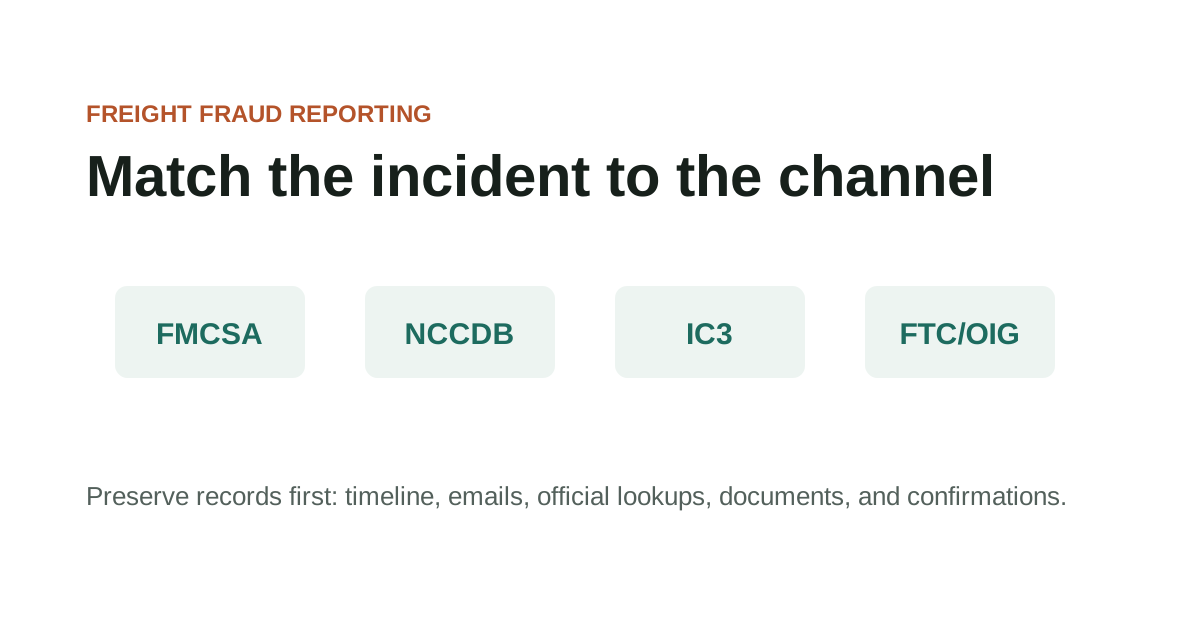
FMCSA's broker and carrier fraud guidance is the authoritative federal starting point for understanding what patterns the agency considers fraud, what records matter, and where to report. The guidance covers unauthorized USDOT use, identity theft, double brokering, suspicious links, SAFER phone comparison, and the reporting paths to NCCDB, OIG, FTC, and IC3.
Using this resource well means treating it as a framework rather than a checklist. The guidance describes known patterns and official reporting channels; it doesn't determine whether a specific transaction is fraudulent. That determination requires comparing the documents in front of you against official records — the guidance tells you which records to use and what to look for.
Using FMCSA fraud guidance as a verification starting point checklist
- Whether the fraud pattern in your situation corresponds to one of the categories FMCSA guidance addresses
- Whether the SAFER phone comparison step has been completed for the carrier or broker in question
- Whether NCCDB is the appropriate complaint channel for the specific situation type
- Whether DOT OIG or FTC reporting is more applicable to the nature of the incident
- Whether documentation has been preserved before filing — reporting portals don't preserve records automatically
Records to check alongside FMCSA's fraud and identity theft guidance
Official-resource pages are entry points, not substitutes for checking the live source. In this guide, that starts with FMCSA fraud guidance, fraud alerts, and current official reporting directions.
Record the exact URL, lookup date, and field you relied on so later reviewers can see what the source showed at the time. Keep the question practical: what changed, who introduced it, and which dated record can be saved before anyone acts on it.
Records to check alongside FMCSA's fraud and identity theft guidance checklist
- Use the official domain directly when checking records or filing reports.
- Save the source page URL and access date with your case notes.
- Check the official FMCSA page for current status before relying on a record.
- Keep copies of complaint confirmations, report numbers, and supporting documents.
What to save when FMCSA fraud guidance is relevant to your situation
For fmcsa broker and carrier fraud guide, the useful record is usually the one that shows where FMCSA fraud guidance, fraud alerts, and current official reporting directions first entered the file.
That record is stronger when it sits beside the dated lookup, the original message, and a note from the official source or reporting channel. It is weaker when it has been renamed, cropped, forwarded without headers, or separated from the transaction timeline.
What to save when FMCSA fraud guidance is relevant to your situation checklist
- Record the name, number, document field, contact path, or instruction tied to FMCSA fraud guidance, fraud alerts, and current official reporting directions.
- Keep the original file or message before saving a marked-up copy.
- Add the source URL, access date, sender identity, and who confirmed or contradicted the detail.
Questions FMCSA fraud guidance helps frame for verification
Hold the lookup, complaint, or reporting decision when the file depends on a new contact path, revised document, missing official record, or mismatch that no one has explained.
The pause should be narrow and written down: the field that does not line up, the source used to check it, and the person or channel that must answer before the work continues.
Questions FMCSA fraud guidance helps frame for verification checklist
- Name the exact field or instruction that does not line up.
- Save the document version or message that introduced the mismatch.
- Check the official or independently known source before using the new detail.
- Record the confirmation result before continuing.
What the guidance page doesn't replace in a live transaction
When using official channels, preserve both the source page and the transaction records that made the lookup necessary. In this guide, that starts with FMCSA fraud guidance, fraud alerts, and current official reporting directions.
For reporting portals, keep confirmation numbers and copies of what was submitted. Keep the question practical: what changed, who introduced it, and which dated record can be saved before anyone acts on it.
What the guidance page doesn't replace in a live transaction checklist
- Official source URL and access date
- Lookup screenshot or saved PDF
- Transaction timeline
- Supporting emails, documents, and call notes
- Complaint or report confirmation
When to move from the guidance page to FMCSA's reporting channels
Official-source questions should match the incident type to the right record or reporting channel. In this guide, that starts with FMCSA fraud guidance, fraud alerts, and current official reporting directions.
If a source has limits, note those limits rather than stretching the record beyond what it can show. Keep the question practical: what changed, who introduced it, and which dated record can be saved before anyone acts on it.
When to move from the guidance page to FMCSA's reporting channels checklist
- Which official source answers this specific question?
- What field or status was checked?
- Does the source warn about data timing or scope?
- Which channel fits the incident type?
Further FMCSA fraud guidance context
Official records can lag, omit context, or show only a narrow regulatory fact. In this guide, that starts with FMCSA fraud guidance, fraud alerts, and current official reporting directions.
Use official resources as evidence of what the source says, not as certification that a private transaction is ready to rely on. Keep the question practical: what changed, who introduced it, and which dated record can be saved before anyone acts on it.
Further FMCSA fraud guidance context checklist
- Do not assume a current record proves sender authorization.
- Do not assume one portal handles every incident type.
- Do not rely on copied screenshots without checking the source.
- Do not treat a third-party summary as the official page.
When to use this channel versus another
Escalate when the official source points to a complaint path, reporting portal, or professional channel outside this site's scope. In this guide, that starts with FMCSA fraud guidance, fraud alerts, and current official reporting directions.
Keep the source result with the transaction file so the next step is based on dated records. Keep the question practical: what changed, who introduced it, and which dated record can be saved before anyone acts on it.
When to use this channel versus another checklist
- The source record conflicts with transaction documents.
- The incident fits an official complaint or cybercrime channel.
- A registration, identity, or authority issue may affect current operations.
- The page has changed and the old guidance may no longer apply.
Source Notes
Source context for FMCSA Broker and Carrier Fraud Guide
For official-resource topics, navigate directly to the official federal domain — fmcsa.dot.gov, ic3.gov, ftc.gov, oig.dot.gov — rather than through search results or third-party links. Federal .gov domains require federal authorization to register and cannot be duplicated. These sources are used here as verification and reporting references, not as legal or regulatory advice.
FAQ
What's the fastest way to find FMCSA's current fraud guidance?
Go directly to fmcsa.dot.gov and navigate to the fraud and identity theft page under the Mission/Help section. Do not rely on a third-party summary — including this guide — for the most current version of FMCSA's guidance.
How often does FMCSA update its fraud guidance?
FMCSA updates its fraud and identity theft guidance as new patterns emerge and as the regulatory environment changes, without a fixed schedule. Checking the source page directly at fmcsa.dot.gov ensures you're reading the current version — third-party summaries, including this site, may not reflect the most recent update.
Does FMCSA's fraud guidance cover intrastate freight transactions?
FMCSA's jurisdiction covers interstate freight brokering and transportation. Some intrastate transactions may fall outside FMCSA's direct regulatory scope. The guidance on this site focuses on FMCSA-regulated interstate freight; intrastate arrangements may have different regulatory contexts depending on the state.
Source References
- Broker and Carrier Fraud and Identity Theft Federal Motor Carrier Safety Administration. primary source. Last checked 2026-06-01. FMCSA guidance on broker and carrier fraud, unauthorized USDOT use, suspicious links, SAFER phone comparison, NCCDB, OIG, FTC, and IC3 reporting pointers.
- Fraud Alerts Federal Motor Carrier Safety Administration. primary source. Last checked 2026-06-04. FMCSA alert page for phishing attempts, spoofed portals, fake notices, SAFER impersonation, and registration-related scams.